
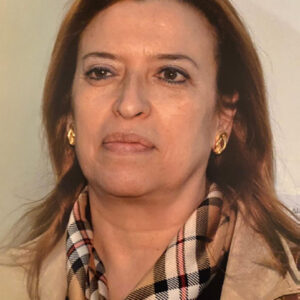
Marilena Stamouli,
eNews Editor
Editorial
Message from the eNews Editor
Dear colleagues,
With the WorldLab 2026 fast approaching, final preparations are underway to lead to a very successful global event. Over a five-day period laboratory medicine professionals will engage in discussions, teamwork and fruitful collaborations about a broad spectrum of topics in our field. The collective expertise and experience of the participants at our congress, is a powerful reminder that, although our daily roles and responsibilities may vary, we all share the same goal: to ensure the highest standards of patient care.
In her message, published in this issue, our President, Prof. Tomris Ozben, gives us valuable information about her agenda, and the important upcoming events of our field, such as the XXVII Latin American Congress of Clinical Biochemistry – COLABIOCLI 2026, to be held in Santa Cruz de la Sierra, Bolivia, from 7–10 October 2026, the 33rd Congress of the Balkan Clinical Laboratory Federation, to take place from 7–11 October 2026 in Sarajevo/Jahorina, Bosnia and Herzegovina, and the WorldLab 2026, to be held in New Delhi, India, from 25-29 October, 2026.
In the present issue the IFCC Divisions, Committees, Task Forces and Working Groups share with us their news and their outstanding work, which highlights their commitment to advancing laboratory medicine worldwide through scientific excellence and technological innovation, in a context of constant scientific and technological evolution.
News from our member societies of Japan, Spain, Chile, Kazakhstan, Palestine and Sri Lanka are also included in this issue, showcasing the commitment of their members to collaboration, knowledge sharing and the promotion of professional growth.
Corporate Members make significant contributions to IFCC activities to advance laboratory medicine and patient care, and to continually strive for excellence. In this issue, you can meet Dr. Lily Li, Corporate Representative for QuidelOrtho, who shares with us her valuable experience of working with IFCC.
Moreover, you can meet an integrated clinical care team from Shandong Cancer Hospital and Institute, Jinan, China, and learn about their achievements. The team is recognized with the 2026 UNIVANTS of Healthcare Excellence awards for innovation, teamwork and measurably better outcomes for patients undergoing cancer treatments.
Laboratory medicine is evolving dynamically, integrating innovation, digital technology, molecular diagnostics and personalized care into everyday practice. Teamwork is of utmost importance to meet these goals. Therefore, we look forward to welcoming you all to WorldLab 2026, one of the most important international events in our field, to participate actively, share your experience, find inspiration, contribute to shaping the future of laboratory medicine and highlight its decisive role in patient care.
Marilena Stamouli
The voice of IFCC
IFCC President’s Message
October 2026
By Tomris Ozben
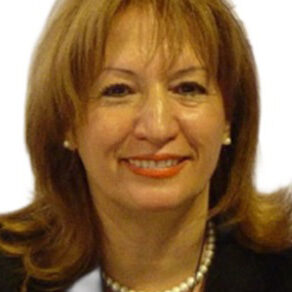
Prof. Tomris Ozben
EuSpLM, Ph.D.
Dear Colleagues and Friends,
As we look ahead to the coming weeks, I am delighted to highlight several important international meetings that will bring together colleagues from across the laboratory medicine community and provide valuable opportunities for scientific exchange, collaboration, and professional networking.
One of the highlights of this month is the XXVII Latin American Congress of Clinical Biochemistry – COLABIOCLI 2026, organized by the Bolivian Society of Clinical Biochemistry (SOBOBIOCLI) in coordination with the Latin American Confederation of Clinical Biochemistry (COLABIOCLI), to be held in Santa Cruz de la Sierra, Bolivia, from 7–10 October 2026. I am particularly pleased that IFCC will have a strong presence at this important regional congress, with three IFCC-sponsored symposia addressing key developments and challenges facing laboratory medicine today.
The scientific programme covers a broad range of topics, including clinical laboratory management and the transition from operational excellence to medical value, as well as the evolving role of laboratory professionals in an era of automation, artificial intelligence, digital transformation, and sustainability. These themes reflect many of the priorities shaping the future of our profession and underline the importance of combining technological innovation with quality, ethics, professional responsibility, and patient-centred care.
I am also honoured to deliver the Opening Lecture at the Congress. I am deeply grateful to the Bolivian Society of Clinical Biochemistry and the local authorities for recognising my visit through my designation as an “Illustrious Guest” by the Autonomous Municipal Government of Santa Cruz de la Sierra. I receive this honour with great appreciation, not only personally, but also as recognition of the importance of our international laboratory medicine community and of the strong collaboration between IFCC and our colleagues in Latin America.
Another important meeting is the 33rd Congress of the Balkan Clinical Laboratory Federation (BCLF), taking place from 7–11 October 2026 in Sarajevo/Jahorina, Bosnia and Herzegovina. The BCLF Congress provides an important platform for strengthening scientific and professional cooperation across the Balkan region and for sharing knowledge and experience in clinical laboratory medicine. Regional meetings such as this are essential for fostering connections among professionals and supporting the continued development and harmonisation of laboratory practices.
I would also like to congratulate the European Organisation for External Quality Assurance Providers in Laboratory Medicine (EQALM) on the occasion of its 30th anniversary, which will be celebrated during the EQALM Symposium in Leuven, Belgium, from 13–15 October 2026. Over the past three decades, EQALM has made an important contribution to advancing External Quality Assessment, education, scientific exchange, and collaboration in laboratory medicine. I am very pleased to contribute a congratulatory video message to mark this important milestone and to express IFCC’s appreciation for our longstanding collaboration with EQALM.
At the end of this month, our global community will gather for WorldLab 2026 in New Delhi, India, one of the most important international events in laboratory medicine. WorldLab offers an exceptional opportunity to exchange scientific knowledge, discuss emerging challenges, explore new technologies, and strengthen international collaboration. I look forward to welcoming colleagues from around the world to this major IFCC event.
Bring your research and your experience, but also bring the questions you cannot yet answer. They may lead to some of the most valuable conversations of the Congress.
Laboratory medicine occupies a central place in healthcare, from disease detection and treatment monitoring to prevention, screening, and public health. As healthcare evolves, our responsibility extends beyond producing reliable results to ensuring that laboratory information contributes meaningfully to clinical and public health decisions.
The WorldLab scientific programme reflects this breadth, with discussions covering cancer and liquid biopsy, cardiovascular and kidney disease, diabetes, reproductive medicine, neurodegeneration, antimicrobial resistance, integrated diagnostics, and other rapidly developing areas. These sessions will connect scientific advances with questions encountered in daily practice and help identify where further research and collaboration are needed.
Innovation and artificial intelligence will receive particular attention. AI, integrated diagnostics, point-of-care testing, mass spectrometry, and other emerging technologies are expanding what we can measure and how laboratory information can be used. Their true value, however, depends on the clinical questions they answer and the benefits they bring to patients. Medical laboratory specialists must therefore remain closely involved in their development, validation, implementation, and clinical use.
Quality remains the foundation of innovation. Sound validation, reliable data, professional oversight, standardisation, metrological traceability, accreditation, data privacy, and cybersecurity are essential to ensuring that new technologies contribute safely and effectively to patient care.
WorldLab will also provide an opportunity to consider broader priorities for our profession, including access to laboratory services, prevention, One Health, antimicrobial resistance, and sustainability. Solutions will differ among healthcare systems, but IFCC can help by sharing evidence, standards, expertise, and experience across regions.
I express my thanks to the IFCC Executive Board, Divisions, Committees, Working Groups, and Task Forces whose scientific projects, publications, and educational activities help our profession respond to these challenges. I am equally grateful to our Regional Federations, Member Societies and Corporate Members for strengthening professional relationships and ensuring that diverse perspectives are represented within our global Federation.
WorldLab is also an important opportunity for the next generation of laboratory medicine professionals. I encourage young scientists and professionals to present their findings, ask questions, exchange ideas, and seek collaborators beyond their usual fields. I also encourage experienced colleagues and our industry partners to engage with them generously and meaningfully. The conversations begun in New Delhi should lead to collaborations and projects that continue long after the Congress.
During WorldLab 2026 on Sunday, 25 October 2026, the IFCC Executive Board and IFCC Functional Units will meet with the IFCC Council, comprising representatives of IFCC Full Members, Affiliate Members, and Corporate Members. Together, we will discuss key priorities and strategic issues shaping the Federation and the future of laboratory medicine. The Council meeting will provide an important opportunity to exchange views, listen to the expectations of our members, and strengthen our collective commitment to IFCC’s mission and future direction.
A meeting with IFCC Corporate Members will also be held on Sunday afternoon, following the Council Meeting, continuing the dialogue established at previous meetings with Corporate Members at WorldLab 2024 in Dubai and at the IFCC General Conference 2025 in Bruges, Belgium, entitled “Meeting of Minds Conference: Connecting Science, Health, and Innovation – The Future Flows Like Water.”
Building on the previous discussion, “Where Is the In Vitro Diagnostic Industry Headed in the Next Decade? A Partnership Model for the Efficient Integration and Adoption of Emerging Technologies and Innovations in the IVD Landscape into Medical Laboratories” the meeting will provide an opportunity for open dialogue with Corporate Members.
The aim is to better understand their current challenges, needs, and expectations, while identifying opportunities to further strengthen collaboration and partnership between IFCC and its Corporate Members.
These meetings demonstrate the breadth and diversity of the IFCC community. Whether at regional congresses or major global gatherings, our shared objective remains the same: to advance laboratory medicine through scientific excellence, education, collaboration, innovation, and a strong commitment to improving patient care and public health.
I look forward to seeing many of you in New Delhi. Let us use WorldLab to share what we know, examine what innovation can truly deliver, learn from one another, and consider how laboratory medicine can contribute even more to healthcare, disease prevention, and better patient outcomes worldwide.
With my warmest regards,
Tomris Ozben
IFCC President
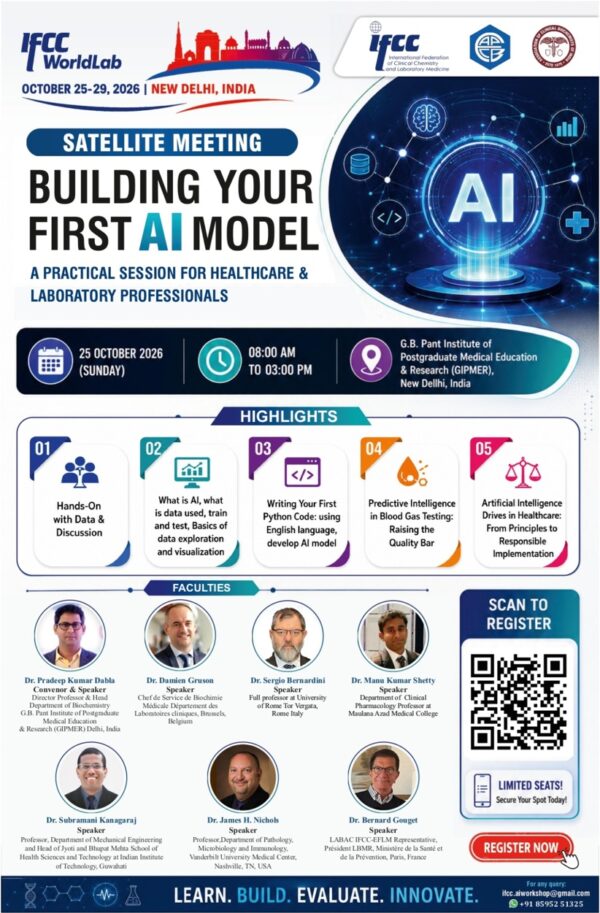
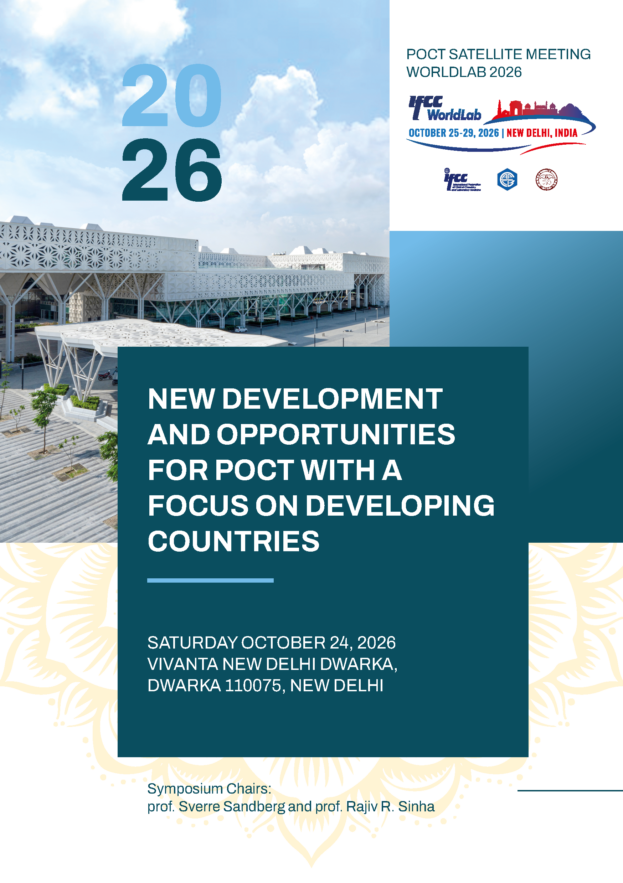
From Data to AI: Build Your First AI Model at IFCC WorldLab New Delhi 2026 Satellite Meeting: 25th October
By Dr. Pradeep Kumar Dabla Convenor; Director Professor & Head Department of Biochemistry G.B. Pant Institute of Postgraduate Medical Education & Research (GIPMER) Delhi, India
By Dr. Bernard Gouget; LABAC IFCC-EFLM Representative, President LBMR, Ministère de la Santé et de la Prévention, Paris, France
Artificial intelligence is rapidly becoming part of modern healthcare and laboratory medicine. The session is designed to explore how do laboratory professionals move beyond understanding AI concepts to actually exploring, developing and evaluating an AI model.
The IFCC WorldLab New Delhi 2026 Satellite Meeting, “Building Your First AI Model: A Practical Session,” offers an opportunity to take that first step. The one-day practical programme will be held on 25 October 2026, from 8:00 AM to 3:00 PM, at the G.B. Pant Institute of Postgraduate Medical Education & Research (GIPMER), New Delhi, India.
The programme is designed for clinical biochemists, young scientists, researchers and healthcare professionals interested in AI measurement and evaluation; the session will connect fundamental concepts with practical application. Participants will explore the foundations of AI in healthcare, data mining and preprocessing, quality assurance, data exploration and visualization, and the principles of training and testing AI models.
A key feature is the hands-on learning component, including working with data and discussion, writing a first Python code, and using natural-language interaction to develop an AI model. Further sessions will examine validation and reporting of AI models in laboratory medicine, predictive intelligence in blood gas testing, and responsible AI implementation and ethics in healthcare.
The programme brings together an international faculty from India, Belgium, Italy, Japan, the United States and France, creating an opportunity for cross-border exchange of experience and perspectives. Places are limited to 60 participants.
“Attendees should bring a laptop and charger for the practical training.”
Join colleagues from around the world in New Delhi to learn, build, evaluate and innovate with AI in healthcare and laboratory medicine
Learn more and register via the official IFCC WorldLab New Delhi 2026:
https://www.ifccnewdelhi2026.org/building-your-first-ai-model-a-practical-session/)
IFCC Visiting Lecturers Take Center Stage at Chile’s 22nd Clinical Chemistry Congress
By Eduardo Aranda
National Representative of Chile to the IFCC
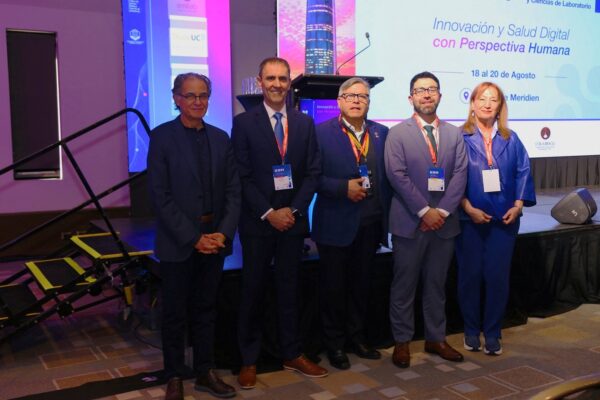
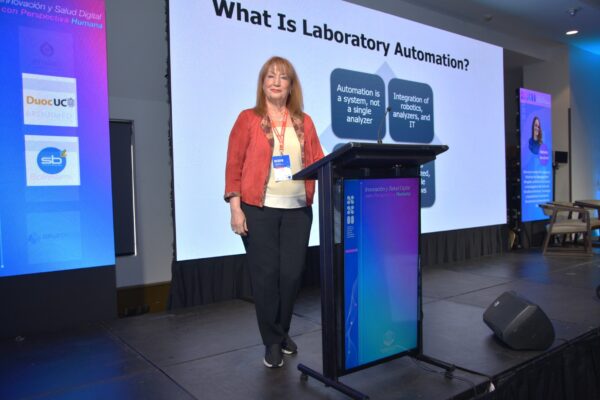
The 22nd Chilean Congress of Clinical Chemistry and Laboratory Sciences brought 452 participants to Hotel Le Méridien from August 18 to 20, 2026, for three days of discussion on “Innovation and Digital Health with a Human Perspective.” Sponsored by the IFCC and COLABIOCLI, the meeting ran alongside Expolab, where 24 in vitro diagnostics companies showcased their work.
The program began on August 17 with two pre-congress courses: “Reference Intervals in the Clinical Laboratory: From the International Standard to Big Data and Multicenter Projects,” held at the Chilean Institute of Public Health, and “Impact of the Preanalytical Process on Patient Safety,” held in the Antarctica Room at Hotel Le Méridien.
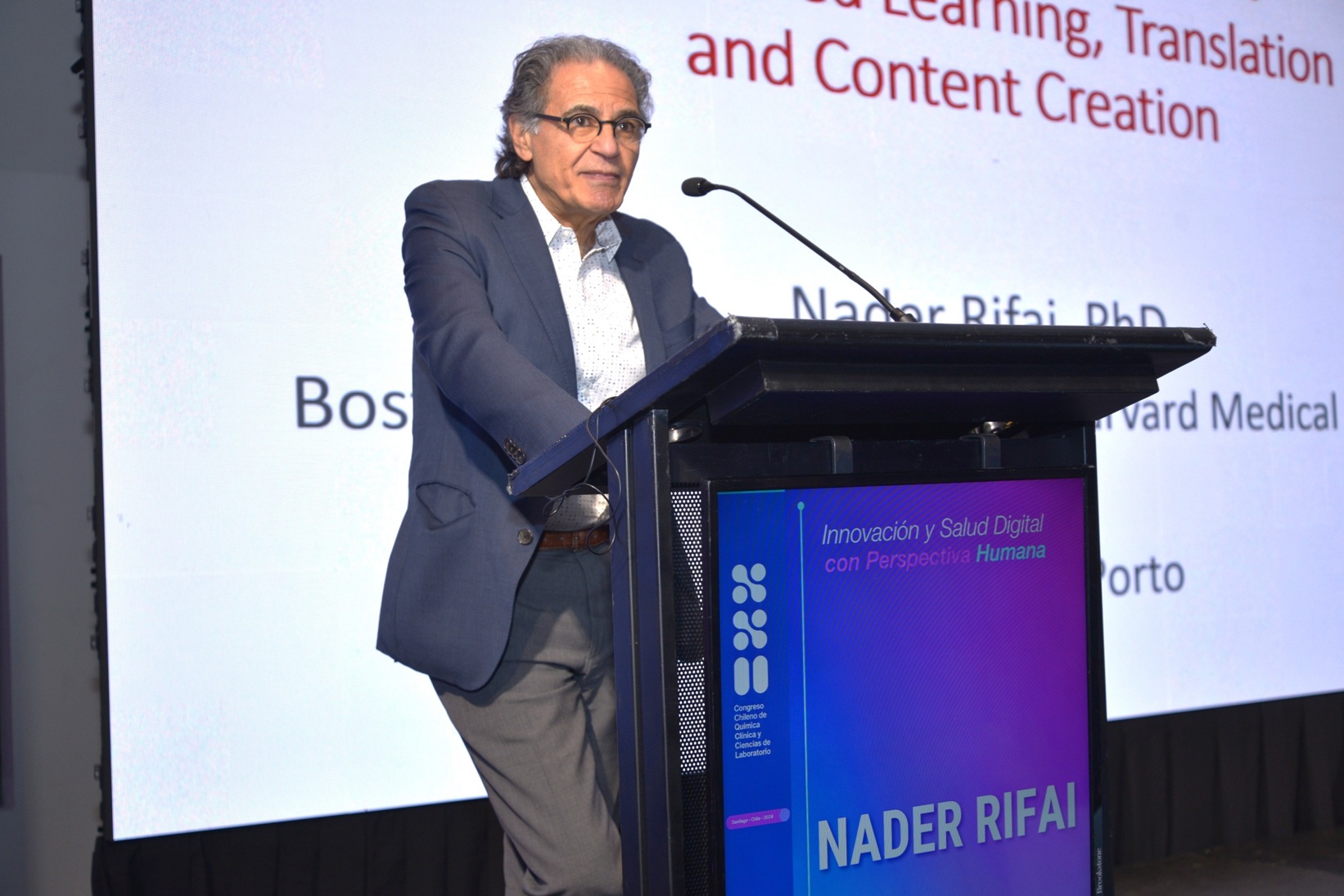
A central feature was the participation of three speakers supported by the IFCC Visiting Lecturer Programme (VLP): Prof. Nader Rifai, Dr. Beatriz Varela and Prof. Bertha Lacouture. Beyond their formal lectures, the specialists met and exchanged views with congress participants. The broader scientific program included seven plenary lectures, 15 symposia and 10 industry-led workshops.
The congress also selected 30 free communications: 24 were presented as e-posters and six as oral presentations. Distinguished guests included IFCC President Prof. Tomris Özben; IFCC President-Elect Prof. Nader Rifai; and Dr. Eduardo Freggiaro, president of Fundación Bioquímica Argentina and COLABIOCLI representative on the IFCC Executive Board.
Visiting Lecturers Expand the Congress Program
Over four days, the VLP speakers gave lectures, supported pre-congress training and connected with local laboratory professionals and students.
Prof. Nader Rifai (United States)
August 18, 2026: Prof. N. Rifai presented the lecture “AI in Medical Education: Personalized Learning, Translation and Content Creation.”
August 19, 2026: Prof. N. Rifai delivered the lecture “Publication Ethics: New Challenges.”
August 21, 2026: Prof. N. Rifai visited Bionet, a private laboratory, and met with the Board of Directors of the Chilean Society of Clinical Chemistry.
Dr. Beatriz Varela (Uruguay)
August 17, 2026: Dr. B. Varela led the pre-congress lecture “Quality Assurance in the Preanalytical Phase: From Risk to Improvement.”
August 19, 2026: Dr. B. Varela presented the lecture “Risk Management: An Analytical Approach.”
Prof. Bertha Lacouture (Colombia)
August 17, 2026: Prof B.Lacouture delivered the pre-congress lecture “Preanalytical Risks in Infectious Disease Serology (Clinical Cases).”
August 19, 2026: Prof B.Lacouture presented the lecture “Molecular Diagnosis of Tuberculosis: Interpretation of Results (Clinical Cases).”
IFCC Professional Scientific Exchange Programme at Clinical Analysis Service of Hospital Universitari i Politècnic La Fe, Valencia (Spain)
By:
Felipe Andrés Zúñiga Arbalti
Associate Professor and Technical Director, OMICS-UdeC Laboratory
Department of Clinical Biochemistry and Immunology
Faculty of Pharmacy, Universidad de Concepción
Concepción, Biobío Region, Chile
email: fzuniga@udec.cl
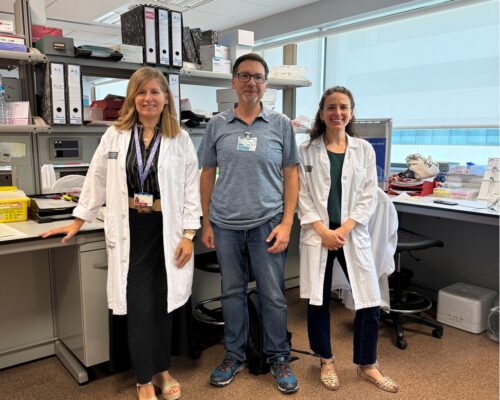
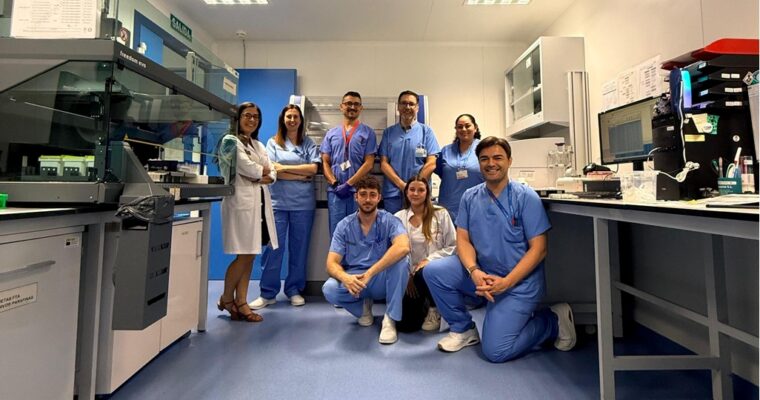
The IFCC Professional Scientific Exchange Programme provided me with an outstanding opportunity to undertake a two-month fellowship (May–June 2026) at the Clinical Analysis Service of Hospital Universitari i Politècnic La Fe (Valencia, Spain). I am sincerely grateful to the International Federation of Clinical Chemistry and Laboratory Medicine for supporting this fellowship and to the entire team at Hospital La Fe for their generosity, professionalism, and commitment to education.
The primary objective of my stay was to strengthen my expertise in clinical molecular diagnostics, clinical genomics, and precision medicine. More importantly, the fellowship allowed me to understand how all components of an integrated molecular diagnostics service—from genetic counseling to laboratory testing, bioinformatics, multidisciplinary interpretation and clinical reporting—work together to support patient care.
During my rotation in the Molecular Biology Unit (UBM), under the guidance of Dr. Eva Barragán, Dr. Marta Illop, and Dr. Inmaculada de Juan Jiménez, I became familiar with the complete molecular diagnostic workflow for acute myeloid leukemia (AML), acute lymphoblastic leukemia (ALL), and hereditary breast and ovarian cancer. I observed routine clinical implementation of automated next-generation sequencing, capillary electrophoresis, and MLPA, gaining valuable insight into quality management, traceability, and ISO 15189-accredited diagnostic workflows.
For approximately one month, I rotated through the Genetics Unit, supervised by Dr. José Cervera, working closely with Dr. Francisco Martínez, Dr. Andrés Zúñiga, Dr. Juan Silvestre Oltra, and Dr. Alessandro Liquori. This experience provided comprehensive exposure to genetic counseling, identification of index cases, family segregation studies, clinical exome analysis, multigene panels, chromosomal microarrays, and pharmacogenomics. I was particularly impressed by the continuous development of bioinformatics pipelines and the integration of genomic and clinical information into routine diagnostics. Discussions on hereditary predisposition to myeloid neoplasms, particularly the role of germline DDX41 variants, highlighted the growing importance of inherited susceptibility in modern hematology.
My rotation in the Cytogenetics Unit, under Dr. Esperanza Such, introduced me to Optical Genome Mapping (OGM) as an emerging genomic technology for characterizing sarcomas and other highly heterogeneous cancers. Together with postgraduate researchers Neus Torres and Alejandro Berenguer, I gained valuable insight into the future applications of structural genome analysis in precision oncology.
I also spent time at the La Fe Biobank, under the supervision of Raquel Amigo, where I learned about biobank governance, sample traceability, quality management, ethical procedures, and the strategic role of biobanks in translational research.
The greatest value of this fellowship was acquiring a comprehensive vision of a modern clinical genomics service. The knowledge gained will be directly transferred to the UdeC-Omics Molecular Diagnostics Laboratory at the University of Concepción, contributing to the implementation of internationally standardized workflows, strengthening quality management and supporting future ISO 15189 accreditation.
I want to express my heartfelt gratitude to Dr. José Cervera, Dr. Eva Barragán, Dr. Esperanza Such, Raquel Amigo, all the professionals, researchers, and technical staff of Hospital La Fe, and to the IFCC for making this unique learning experience possible. This fellowship has strengthened not only my professional skills but also the collaborative relationship between the University of Concepción and Hospital La Fe, creating new opportunities for future scientific cooperation.
IFCC Professional Scientific Exchange Programme at the Metabolic Biochemistry unit of Biochemistry and Molecular Biology Laboratory, La Timone Hospital, Marseille (France)
By Rihab Makhlouf (MD)
Habib Bourguiba University Hospital, Faculty of Medicine of Sfax, Tunisia
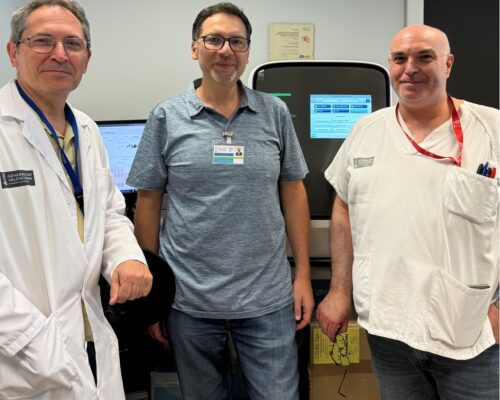
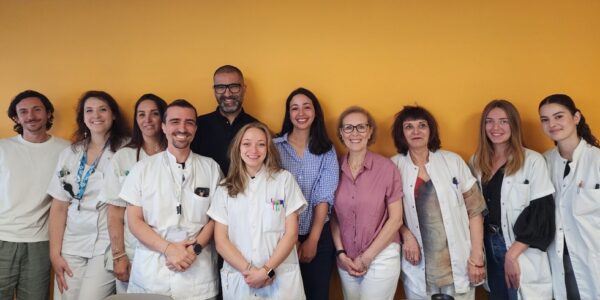
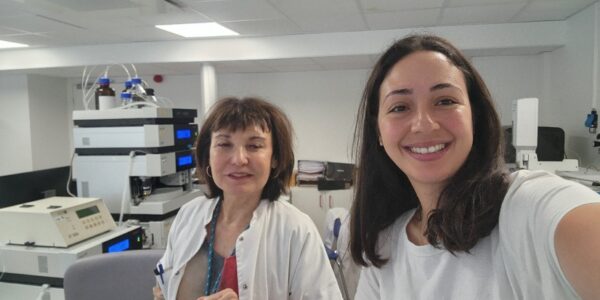
Thanks to the IFCC Professional Scientific Exchange Programme (PSEP), I had the privilege of spending three months at the Metabolic Biochemistry unit of Biochemistry and Molecular Biology Laboratory, La Timone Hospital, Marseille (France). This specialized laboratory is a leading French center for neonatal screening and the biochemical diagnosis of inborn errors of metabolism.
A major component of my training involved the diagnosis and follow-up of patients with inborn errors of metabolism under the supervision of Dr Margueritte Gastaldi and Dr Julia Dodivers. Through daily laboratory activities, clinical case discussions, and result interpretation, I strengthened my understanding of the clinical applications of amino acid analysis, acylcarnitine profiling, and organic acid analysis in the diagnosis and monitoring of these complex disorders.
An especially enriching aspect of my stay was the opportunity to participate in multidisciplinary consultation meetings dedicated to inborn errors of metabolism, including national multidisciplinary meetings and those organized by the Coordinating Reference Center for Inherited Metabolic Diseases. These meetings brought together laboratory specialists, metabolic physicians, dietitians, and other healthcare professionals to discuss complex clinical cases and therapeutic strategies. Participating in these meetings allowed me to better appreciate the importance of close interdisciplinary collaboration in optimizing patient diagnosis and long-term care.
I also had the opportunity to discover the organization and functioning of the french neonatal screening programme under the supervision of Dr Mohammed Chefrour. Since neonatal screening is not yet implemented in Tunisia, this experience was particularly valuable. I learned about the complete workflow of the programme, from sample processing and analytical strategies to result interpretation, recall procedures, and clinical follow-up. This experience highlighted the major public health impact of neonatal screening in enabling early diagnosis and timely treatment of congenital disorders.
From a technical perspective, the exchange provided comprehensive training in analytical platforms used in metabolic investigations. Thanks especially to Patrick, together with Audrey, Coralie, and the entire team, I gained an in-depth understanding of tandem liquid chromatography–mass spectrometry (LC-MS/MS) and gas chromatography–mass spectrometry (GC-MS). I was also introduced to the laboratory’s quality management procedures, including the interpretation of internal quality controls and the review of External Quality Assessment results.
Beyond the scientific and technical training, this exchange allowed me to experience a stimulating and highly collaborative working environment. I would like to warmly thank Dr M.Gastaldi, Dr J.Dodivers, Dr M.Chefrour, and Dr Giovanna Mottola and the laboratory team for their guidance, generosity, and for making these three months both scientifically enriching and personally memorable.
I would like to express my sincere gratitude to Professor Régis Guieu and Professor Bruno Lacarelle for welcoming me into their department and making this exchange possible. I am deeply grateful to Professor Fatma Ayadi, Head of the Biochemistry Department at Habib Bourguiba University Hospital, Sfax, Tunisia, for encouraging and supporting me throughout this experience. My special thanks also go to Professor Yousr Galai, President of the Tunisian Society of Clinical Biology, for the continuous support.
Finally, I would like to express my sincere gratitude to the IFCC for supporting this exchange opportunity. This programme enabled me to establish meaningful professional relationships and opened the door to future collaborations. It represents an important milestone in my professional development and will undoubtedly contribute to strengthening expertise in inborn errors of metabolism. The knowledge and experience I acquired will support future developments in metabolic biochemistry in my region.
On the Road to 2050: A Young Scientist’s Voice for ETD communication
By Serafeim Karathanos
Young Member of the IFCC Emerging Technologies Division Executive Committee and Bernard Gouget, Damien Gruson, Swarup Shah, Yan Liu, Sven Ebert, Ian Godber, ETD EC
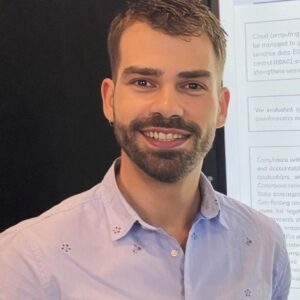
Professor Damien Gruson, Chair of the IFCC Emerging Technologies Division (ETD), has invited me to help communicate and promote the work of its Executive Committee. I see this challenging role as that of a scientific sentinel and a connector: following emerging questions, making the ETD EC’s work visible and bringing its messages to new audiences. The ETD EC’s proposed Paving the Road to 2050 programme gives this communication mission a clear direction. It envisages laboratory medicine as an interconnected network of biological, digital, clinical and environmental information. Its proposed 2027–2029 roadmap moves from connected intelligence for prevention, through precision health and disruptive technologies, towards sustainable implementation. For 2027, the questions include how to bring AI into clinical practice responsibly, how laboratory results can improve preventive pathways, and how human, animal and environmental data could contribute to One Health intelligence.
My first responsibility is to follow what the ETD EC produces and publishes, and help that work reach its intended audiences. Its Functional Units provide scientific expertise, cases and educational resources. My own work in flow cytometry gives me a specialist’s view of how quickly technology and professional skills evolve. As a young scientist, I also know how important it is to see the people, decisions and career opportunities behind scientific publications. I propose a small ETD scientific newsroom that follows each important subject before, during and after an ETD activity. Before a congress or forum, an ETD Flash News item could introduce the question and invite contributions. During the meeting, short, filmed interviews with ETD EC members, Functional Unit experts and invited partners could capture the findings and remaining uncertainties. Short updates on LinkedIn and other IFCC social media channels could direct readers to the relevant science. Afterwards, an IFCC News feature would explain the conclusions, identify the next output and indicate when the ETD will report back. Approved visuals, short texts and links would help speakers, federations and national societies relay the work through their own networks. An IFCC page would bring the publications, interviews and follow-up together.
The evolution of the laboratory workforce offers a first theme to explore. As AI, automation and distributed diagnostics develop, what combination of skills will make a laboratory team effective? Trusted analytical practice remains essential, alongside clinical interpretation, data and AI stewardship, communication and coordination across diagnostic networks. These capabilities must work together, although they need not all reside in one person. The views of young professionals are particularly important. A short social media video could ask: Which skill do you want to develop, and which new role can you imagine for yourself? Responses from different IFCC regions could inform an interview between experienced laboratory professionals and those entering the field. A visual career map could show paths through technical expertise, clinical consultation, data science and quality. An interactive case could ask how a team should respond when an automated result conflicts with clinical information. These formats would open the discussion while the related scientific manuscript continues through its publication process.
This first theme could also bring different voices into the same conversation. A filmed discussion with a laboratory professional, clinician, engineer, IVD or AI developer, and patient representative could examine how technology changes care: who evaluates its performance, who interprets its results, who acts on them, and how the team works together. Short versions would answer the questions most relevant to each audience. A clinician might want a case about interpretation; a future professional, a feature about skills and careers; a patient, an explanation of the expertise behind a reliable result. A story proposed to a general health magazine could ask: Who will work in tomorrow’s laboratories, and why should patients care? The ETD’s scientific work would remain the reference, with technical contributions and interests clearly identified.
My professional networks, including LinkedIn, provide another part of this newsroom: listening and reporting back. Questions from young professionals, clinicians and the public can reveal where an ETD EC message needs a clearer explanation or where a Functional Unit’s resource deserves wider attention. The IFCC Task Force Young Scientists could help circulate published ETD messages and bring regional views into the discussion. The ETD EC would retain responsibility for its scientific priorities and conclusions. The workforce theme would give us a first campaign to produce and assess: Flash News, interviews, a visual career map, an interactive case and articles for professional and wider audiences, all linked to the appropriate scientific sources as they become available. I would report to the ETD EC on who engaged with these materials, what questions they asked and which partners used them. The next campaign would build on those findings.
By repeating this process across the ETD EC’s work, we can give laboratory professionals a stronger public presence and help more people understand the IFCC’s contribution to health.
The road to 2050 should be visible as it is being built: through the science we produce, the people whose work we explain and the questions we bring back to the ETD for its next steps.
That visibility also depends on taking ETD stories beyond IFCC’s own channels. Alongside IFCC News, the IFCC website and social media, we should seek space in clinical publications, professional newsletters, health magazines, podcasts and patient organizations. Each story would be adapted to its readers and linked to the relevant scientific work. These external outlets can bring the ETD’s contribution to clinicians, future professionals and members of the public who do not yet follow the IFCC.
A Mark that moves forward: the story behind PROCEED®
How IFCC gave its global continuing education accreditation framework a visual language of science, growth, impact, and trust
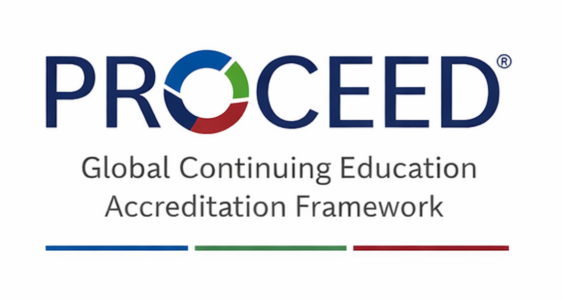
A registered trademark can protect a name. A strong identity can carry a mission. As PROCEED® moves from concept to implementation, its visual language tells a broader story about IFCC’s plan to advance continuing education in laboratory medicine through scientific rigor, transparent governance, professional growth, and measurable relevance to practice.
By: Sedef Yenice, with James O’Connor as co-author, on behalf of the IFCC Executive Board–Accreditation Committee (EB-AccC). David Kinniburgh chairs the Committee, whose members are James O’Connor, Adrian Park, Nader Rifai, and Sedef Yenice.
From an accreditation framework to a shared identity
Continuing education is essential in a discipline that evolves as rapidly as laboratory medicine. New technologies, analytical methods, clinical evidence, and regulatory expectations continually reshape professional practice. Education must therefore do more than transfer information: it must address real needs, support competence, remain independent of inappropriate commercial influence, and provide a credible record of participation and learning.
PROCEED® – Providing Continuing Education Excellence and Development – was established within IFCC to provide a structured global framework. Developed by the IFCC Executive Board – Accreditation Committee (EB-AccC), the system aligns educational design, accreditation review, participation verification, post-event evaluation, credit attribution, and quality improvement. It complements national accreditation and CPD systems and gives IFCC educational activities a coherent, internationally recognized identity.
A name that is also a direction
PROCEED® is unusual because it operates on two levels simultaneously. As an acronym, it describes the framework. As a verb, it conveys movement, closely aligning with the nature of professional education. A congress, webinar, or course may end, but professional learning does not. People revisit, apply, evaluate, and expand their knowledge throughout their careers.
PROCEED® does not denote a destination. It denotes the decision to keep moving.

The “O” that carries the story
The logo’s most distinctive element is the segmented ring that replaces the letter O. Starting at the upper arc and moving clockwise, the ring’s four colored arcs are bright scientific blue, green, red, and deep institutional blue. They surround an open central space and are separated by narrow negative-space gaps, creating a sense of continuity and motion.
Within the PROCEED® brand narrative, the segmented circle represents a structured educational cycle that remains open to progress.
It places the learner at the heart of the identity and conveys openness, transparency, independence, and trust.
Beneath the descriptor, three horizontal strokes repeat the blue-green-red sequence. They anchor the mark and create a simple progression: science provides the foundation, professional development advances knowledge, and clinical impact gives education its purpose.
Color with meaning
| BRIGHTER SCIENTIFIC BLUE – SCIENTIFIC INTEGRITY
Evidence-based practice, scientific rigor, and credibility. |
GREEN – PROFESSIONAL DEVELOPMENT
Lifelong learning, professional growth, and advancement.
|
| DEEP INSTITUTIONAL BLUE – IFCC AUTHORITY AND TRUST
IFCC’s institutional foundation, professional authority, and confidence.
|
RED – CLINICAL IMPACT
Education translated into improved laboratory practice and better patient care.
|
A mark of governance – not a promotional badge
The visual identity is inseparable from the governance that underpins it. The PROCEED® logo may be used only for educational activities formally accredited by the EB-AccC.
This distinction matters. A credible accreditation mark must convey not only educational ambition but also defined responsibility. Within PROCEED®, the Scientific Program Committee designs the educational program and learning outcomes; the EB-AccC reviews and confirms accreditation requirements; event and professional conference organizers implement the operational process; and the digital platform supports attendance, evaluation, credit calculation, and audit traceability. The platform enables the workflow but does not replace the accreditation authority.
IFCC WorldLab 2026 in New Delhi will offer a major opportunity to bring this identity to life. Participants will encounter PROCEED® not only as a logo on a program or certificate but also as part of the complete accreditation pathway – from published educational outcomes and attendance verification to evaluation and access to CE documentation.
Why the story matters
Scientific organizations rightly focus on standards, evidence, and governance. Yet a global initiative also needs a clear, memorable way to communicate its purpose. A strong identity helps a complex framework be understood quickly and recognized consistently across countries, congresses, and digital environments. PROCEED® brings these elements together. Its name conveys forward movement. Its four arcs connect scientific integrity, professional development, clinical impact, and institutional trust; the open central space conveys transparency, independence, and trust. Its tagline – Advancing Excellence in Laboratory Medicine Education – turns these elements into a shared promise.
PROCEED® was registered as a European Union trade mark by the European Union Intellectual Property Office on 1 March 2025 (registration no. 019095576), providing formal protection for the name and identity. However, a logo alone cannot build trust. Trust is earned through consistent standards, transparent decisions, and a credible participant experience. That work is underway as PROCEED® moves from identity to implementation.
Join Us as We PROCEED®
Toward a Future of Excellence in Laboratory Medicine Education
About PROCEED®
| PROCEED® – Providing Continuing Education Excellence and Development
PROCEED® is the IFCC global framework for accrediting continuing education in laboratory medicine. |
The IFCC C-MHBLM: Connecting Lab Medicine and Digital Health for Prevention
By B. Gouget, J. Nichols, L. Abdel Wareth, A. Ganguly, J. Rytkönen, E. Saatçi, A. Gammie, J. Becker, K. Kotani, IFCC C-MHBLM
Effective prevention begins with identifying risks and continues through screening, confirmation, care and follow-up. Yet prevention programmes often know how many tests have been performed more readily than whether people have received the next intervention they need. New diagnostic tools, mobile health and connected data can help reveal these gaps and improve the continuity of care. Their value for population health depends on a clear outcome: turning reliable information into timely, effective action.
Prevention operates at several levels. Primary prevention aims to prevent disease before it develops, through vaccination and the reduction of harmful exposures. One Health helps identify risks shared by people, animals and their environment, including emerging infections and antimicrobial resistance. The exposome adds a view across the life course: it considers the chemical, physical, biological and social exposures a person encounters, together with the body’s responses. Laboratory measurements and environmental data help identify risks that can be addressed at their source. This is the purpose of primary prevention: acting on exposure and risk before disease begins, particularly during pregnancy and early childhood. Secondary prevention detects disease early enough for timely intervention. Tertiary prevention limits complications in people already living with a condition. Laboratory medicine contributes across this continuum: it measures exposure, detects infection or disease, confirms findings and monitors change. The laboratory professional helps ensure that results are reliable and interpreted in the context in which decisions are made. The WHO strategy to eliminate cervical cancer illustrates why these levels must work together: HPV vaccination, screening and treatment form a connected pathway. Other priorities expose similar gaps. During pregnancy, testing for HIV, hepatitis B and syphilis must lead to appropriate care for the mother and follow-up for the infant. For tuberculosis, WHO recommendations issued in 2026 include molecular tests that can be used closer to where people seek care. In chronic kidney disease, successive laboratory results can help detect and monitor a condition that may initially cause few symptoms.
Across these examples, the question is not only whether a test is available, but whether people can complete the next step. Prevention also requires a population view. Laboratory findings support the surveillance of infectious diseases and antimicrobial resistance, while wastewater monitoring provides complementary information on the circulation of some pathogens. Environmental exposure remains equally relevant: in 2026, WHO introduced a package to help countries measure lead exposure, respond to elevated blood lead levels and address their sources. A measurement becomes preventive when it leads to protection. Blood lead testing illustrates how a laboratory result can document one exposure and prompt action on its source; no single test measures the whole exposome.
Mobile health and connected devices add information between visits. Smartphones can support communication and follow-up; sensors can record selected measurements over time Environmental sensors can add information on the conditions in which people live, while laboratory biomarkers help assess selected exposures and biological responses. When these data are brought together with laboratory and clinical results, they may help identify a change that requires review. At programme level, appropriately governed data can reveal where people are lost between screening, confirmation and care. The challenge is to establish which measurements are dependable, who reviews them and what response follows an alert.
Artificial intelligence has a distinct role in prevention. It can analyze large sets of laboratory, clinical and population data, help identify patterns that warrant investigation and support the evaluation of programmes across locations or groups. It can also accelerate research into how risks develop over time. By examining exposure, clinical and biological data together, AI may uncover associations worth investigating; models of combined exposures still need validation before they guide individual decisions. Its performance must be assessed against the decision it is intended to support: does an alert lead to earlier confirmation, better follow-up or a reduction in missed care? Representative data, human oversight and attention to unequal access are essential if AI is to improve prevention across different populations. The European Health EU – Human avatars to prevent and cure diseases initiative offers a longer-term concept for this work. It envisages bringing together biological and omics data, imaging, sensors, environmental information and lifestyle data to describe a person’s changing health trajectory. AI may help researchers explore relationships across these sources. The publicly available material presents this as a research vision; it does not yet establish human avatars as clinically validated tools for predicting disease in routine care.
The IFCC C‑MHBLM brings relevant, focused expertise to these questions. Its work on biosensor validation, patient-generated data in health records and smartwatches addresses measurement quality, interoperability and clinical interpretation. Prevention extends beyond the remit of one committee, however. It also involves diagnostic access, primary care, epidemiology, environmental health, programme design and data governance. One Health and exposome questions also require expertise in animal health, environmental science and exposure epidemiology. Progress calls for the C‑MHBLM to work with other IFCC functional units, member societies and regional federations, alongside public health bodies, care teams and patient organizations.
A feasible starting project is a short survey through the IFCC regional networks. Participating societies could each identify two or three locally important prevention pathways and report which diagnostic and mobile tools are used, where follow-up breaks down, what data can be connected and what prevents a result from leading to action. For locally relevant pathways, it could also identify which animal or environmental observations and exposure biomarkers are available, and whether they can inform a defined prevention action. The C‑MHBLM could help design the questions and assess the role of connected tools, while regional and clinical partners bring the programme context. The findings would provide a basis for selecting a small number of pathways for further work, with measurable outcomes such as time to confirmatory testing or the proportion of people who reach care. That would give the IFCC a practical route from discussion to evidence: start with the prevention gaps identified by its regions, bring the right expertise together, and test whether better use of laboratory and digital data improves the continuity of care.
New podcasts from the IFCC Committee on Clinical Application of Cardiac Bio-Markers

By Kristin M Aakre
Professor, University of Bergen
Consultant, Haukeland University Hospital, NO
Chair, IFCC Committee on Clinical Application of Cardiac Bio-Markers

Allan S. Jaffe
Wayne and Kathryn Preisel Professor for Cardiovascular Research at Mayo Clinic, Rochester, MN
Two new podcasts have become available from the IFCC Committee on Clinical Application on Cardiac Bio-Markers. In these podcasts Emergency Physician and Professor Louis Cullen interviews Professor Kristin Moberg Aakre and Professor Allan Jaffe, both experts on cardiac biomarkers, leaders in the field and key members of the IFCC Committee on Clinical Application of Cardiac Bio-Markers.
The first podcast “Current and Future Indication for Testing and Use of Cardiac Troponin in Children” focuses on the use of cardiac biomarkers, particularly cardiac troponins in children. Professor Jaffe and Professor Aakre discuss the challenges of applying biomarkers developed primarily for adult cardiovascular disease to pediatric populations. They highlight that troponin concentrations vary with age and sex, requiring age-specific and assay-specific reference limits. Troponin values are highest around birth, decrease during childhood, and rise again during puberty. Although elevated troponin may indicate conditions such as myocarditis, chest trauma, chemotherapy-related cardiac injury, or congenital heart disease, evidence remains insufficient to define clear testing indications or to define universal decision thresholds. The speakers emphasize the lack of robust pediatric reference studies and conclude that local clinical needs should guide interpretation until additional data become available. They also indicated the formation of a task force to explore similar considerations with natriuretic peptides.
The second podcast is a “Getting to Know the Experts” interview with Professor Kristin M Aakre, Chair of the IFCC Committee on Clinical Applications of Cardiac Bio-Markers. She describes her unconventional path from internal medicine to laboratory medicine, research, and ultimately a professorship. Her interest in cardiac biomarkers began during the implementation of high-sensitivity troponin testing in Norway, which led to research on biological variation and large clinical studies in collaboration with cardiologists and emergency physicians. Prof. Aakre highlights mentorship, interdisciplinary collaboration, and support from colleagues as key contributors to her success. Her most rewarding achievement was mentoring PhD students and helping build clinical biomarker research programs. For young researchers, she advocates generosity, collaboration, confidence, openness to opportunities, and the courage to pursue ambitious goals.
Full Cardiac Q&A Series now available for global use

The IFCC Committee on Clinical Applications of Cardiac Bio-Markers (C-CB) continues their exceptional legacy of global educational leadership with the completion of their valued Q&A series.
Aligning with the committee’s overarching objective to develop and disseminate relevant educational materials that advance the use of cardiac biomarkers worldwide, the IFCC C-CB recently completed their sixth Q&A document, completing a comprehensive 6-part series that collectively addresses the most frequently asked topics and questions in the field of cardiac diagnostics.
What topics are covered in the Q&A series?
Each edition within the complete cardiac series linked below was developed through expert consensus within the IFCC C-CB committee. The topics are distinct yet related, reflecting the focus areas most often raised by industry teams that support medical and scientific guidance for customers.
- Cardiac Q&A Series I: The Use of Troponin in the Diagnosis of AMI
- Cardiac Q&A Series II: Point of care High-Sensitive Cardiac Troponin Assays
- Cardiac Q&A Series III: Common questions about Natriuretic Peptide Assay Differences & Clinical Use
- Cardiac Q&A Series IV: Cardiac Troponin Assays Differences and how they affect Clinical Use
- Cardiac Q&A Series V: Analytical, Physiological, and Clinical factors affecting Troponin Performance
- Cardiac Q&A Series VI: Cardiac Troponin in Children
How often will the documents be updated?
As cardiac diagnostics is a rapidly evolving field, future revisions are expected. The IFCC C-CB has committed to reviewing and revitalizing relevant content every two years to maintain accuracy and sustained value. Although each document provides foundational knowledge across each topic, the cited references offer opportunities for deeper review and broader understanding.
How can these documents be used?
The IFCC C-CB encourages everyone to review, learn from, and share these documents to help address common questions in cardiac diagnostics and support improved patient care around the globe through expert guidance.
“I am really proud to have led this effort,” comments Professor Kristin Moberg Aakre, Professor at the University of Bergen, Senior Physician at Haukeland University Hospital and current chair of the IFCC C-CB. “This was a 2-year effort that was made possible with a great deal of thought and collaboration.”
“Education is crucial,” comments Professor Louise Cullen, Emergency physician, Brisbane, Australia and Adjunct Professor, Faculty of Health, Queensland University of Technology. “With the completed series, expert guidance is now readily accessible in a user-friendly format.”
As industry leads who were instrumental in the Q&A project, Siemens Healthineers’ Kalen Nissen and Abbott’s Tricia Ravalico add to the conversation, “A warm thank you to IFCC and the entire IFCC C-CB committee for their partnership, valued expertise and continued commitment to excellence. These documents tackle a global unmet need and are absolutely relevant to support high-quality and evidence-driven cardiovascular patient care.”
How can I learn more?
This IFCC C-CB Q&A series is just one of the many initiatives led by the IFCC C-CB. Other educational assets include published manuscripts, educational podcasts and webinars. In addition, longstanding assets developed by this team are Biomarker Reference Tables that capture the most up to date performance characteristics across available troponin and natriuretic peptide assays on the market.
If you wish to learn more about the committee, please reach out to Dr Kristin Moberg Aakre, chair of the IFCC C-CB at kristin.moberg.aakre@helse-bergen.no. The C-CB welcomes corresponding members from IFCC corporate members and national societies with IFCC affiliations.
Unlock the Clinical Value of Your Laboratory: IFCC Online Modules on Outcome Studies
How can laboratory medicine demonstrate its impact on patient care and clinical outcomes?
The IFCC Task Force on Outcome Studies in Laboratory Medicine (TF-OSLM) offers a dedicated series of online modules exploring how outcome studies can help demonstrate and strengthen the clinical value of laboratory testing.
Available on demand through the IFCC eAcademy, the modules provide an introduction to outcome studies, practical guidance on their design and implementation, and real-world examples illustrating their impact in different clinical settings.
The series include:
- Introduction – presented by Zhen Zhao, PhD, DABCC, FADLM, Chair of TF-OSLM, providing an overview of outcome studies and their relevance to laboratory medicine.
- Designing and Conducting Outcome Studies in Laboratory Medicine – Giuseppe Lippi, MD, Professor of Clinical Biochemistry and Dean of the Medical School at the University of Verona, discusses key principles for designing and conducting outcome studies.
- Impact of NT-proBNP Guided Management of Chronic Heart Failure on Patient Outcome in a Nigerian Tertiary Hospital – Lucius Chidiebere Imoh, MD, presents a practical example of how laboratory-guided management can influence patient outcomes.
- The Research Implementation of the Clinical Model for Evaluating the CYP2C19 Allele Genotype-Guided Clopidogrel Treatment – Konstantine Liluashvili, MD, PhD, explores the application of laboratory information to support personalised treatment.
- Development of Laboratory-Based Risk Scores to Predict Mortality in COVID-19 Patients – Jennifer Taher, PhD, FCACB, illustrates the use of laboratory data to develop risk prediction tools in clinical practice.
Together, these modules highlight how laboratory professionals can move beyond traditional analytical measures and investigate the clinical and patient-centred impact of laboratory testing.
Whether you are interested in designing an outcome study or exploring examples of how laboratory data can support clinical decision-making, the TF-OSLM modules offer an accessible opportunity to expand your knowledge and discover new ways to demonstrate the value of laboratory medicine.
Explore the modules on the IFCC eAcademy and learn how outcome studies can help unlock the clinical value of your laboratory.
New Social Media Process: Share Updates, Achievements, Publications and more through IFCC Social Media

The IFCC Committee on Internet and Digital Communications (C-IDC) is proud to launch a new process for social media posts through approved IFCC accounts. This new process aims to facilitate faster and more effective content sharing to help amplify the outstanding work associated with the IFCC.
All IFCC divisions, working groups, committees, task forces and other IFCC functional units are invited to propose and submit content through this process. All content should now be submitted using the form and policy shared by the C-IDC.
Content can include, but is not restricted to:
- Announcing a new publication or awards
- Informative content for the general public, healthcare professionals, or laboratory professionals
- Calls for applications or registrations for various activities
- Presentations and/or webinars of working group/functional unit members
- An overview of the working group/functional unit’s activities and outcomes
Anyone sharing their experience of an IFCC activity, project, or event on social media is encouraged to tag the official IFCC accounts and pages:
Additionally, IFCC also has a WhatsApp IFCC channel.
Tips for creating engaging social media posts
- Be concise and timely
- Include a call to action (e.g., like or share, sign-up today, read more)
- Include a visual, where possible
- Use hashtags and tagging of stakeholders
IFCC outcomes and activities contribute to advancing the field of laboratory medicine and healthcare overall and we are excited to further amplify this impact through enhanced and effective communication. We look forward to partnering with you.
For questions/or urgent posts, please reach out directly to social@ifcc.org. For more details on the IFCC Social Media policy, please visit the C-IDC webpage.

IFCC: the people
Lab Medicine at the Frontline of Health Security: Asst. Prof. Ebru Saatçi, C-MHBLM member, bringing a rare expertise to IFCC’s Global Mission
By: Bernard Gouget (ETD-EC liaison), James Nichols (Chair C-MHBLM), Laïla AbdelWareth, Anirban Ganguly, Jani Rytkonen, Ebru Saatçi, C-MHBLM members

As global health challenges become increasingly complex, laboratory medicine is evolving far beyond traditional diagnostics to become a strategic pillar of health security, emergency preparedness and resilient healthcare systems. The rapid emergence of infectious diseases, the growing frequency of public health emergencies and the increasing need for rapid, reliable diagnostic solutions have reinforced the central role of laboratory professionals in protecting global health. Today, they are expected not only to provide accurate diagnostic services but also to contribute to preparedness, rapid response and the development of innovative technologies capable of supporting healthcare systems under challenging conditions. Within this evolving landscape, the IFCC Committee on Mobile Health and Bioengineering in Laboratory Medicine (C-MHBLM) is pleased to highlight the unique expertise of Asst. Prof. Ebru Saatçi, whose multidisciplinary background combines laboratory medicine, biochemistry, biosensor technology, and CBRN (Chemical, Biological, Radiological and Nuclear) preparedness. Such a combination of scientific, technological and operational expertise is uncommon within the international laboratory medicine community and represents a valuable asset for the IFCC, strengthening its capacity to promote innovation, preparedness and international collaboration in support of global health.
Dr. Saatçi graduated from the Faculty of Medicine at Dokuz Eylül University, İzmir, Türkiye, before obtaining her PhD in Biochemistry from Middle East Technical University. She is currently Assistant Professor in the Department of Biology, Faculty of Science, Erciyes University, Kayseri, while serving as a researcher in the CBRN Division of TÜBİTAK Marmara Research Center (MAM), one of Türkiye’s leading scientific research institutions. As a member of the IFCC Committee on Mobile Health and Bioengineering in Laboratory Medicine, Dr. Saatçi contributes to the development of innovative biosensors and connected diagnostic technologies that support clinical laboratories, emergency laboratory response, and public health preparedness. In collaboration with the Turkish Biochemical Society, she promotes the integration of laboratory medicine, digital health and bioengineering to strengthen resilient healthcare systems. Her professional experience demonstrates how laboratory medicine extends well beyond analytical testing. Through her work, she contributes to several strategic areas that are becoming increasingly important for the future of laboratory medicine:
- Development and validation of innovative biosensors for the rapid detection of biological agents and emerging pathogens.
- Strengthening laboratory preparedness for emerging infectious diseases and other biological emergencies requiring rapid analytical capacity.
- Development of point-of-care and field-deployable diagnostic technologies suitable for emergency situations and resource-limited environments.
- Identification and validation of biomarkers supporting exposure assessment, diagnosis and clinical management.
- Quality assurance and validation of analytical methods used during health emergencies.
- Collaboration with hospitals, public health authorities and emergency response organizations to improve coordinated laboratory preparedness.
- Integration of laboratory medicine into health security strategies, promoting resilient healthcare systems capable of responding effectively to future public health crises.
These activities are fully aligned with the strategic priorities of IFCC and C-MHBLM, including digital diagnostics, connected biosensors, mobile health, emergency laboratory preparedness, One Health and preparedness for future pandemics. More importantly, this expertise represents an opportunity for the IFCC community. As health emergencies increasingly transcend national borders, scientific collaboration has become one of the strongest tools for protecting populations. Through experts such as Asst. Prof. Ebru Saatçi, the IFCC Committee on Mobile Health and Bioengineering in Laboratory Medicine (C-MHBLM) brings together complementary expertise in laboratory medicine, biosensors, digital health and health security to help laboratories anticipate future challenges and strengthen healthcare resilience worldwide. This unique expertise represents a valuable resource for the IFCC community. By sharing knowledge, promoting innovation and fostering international collaboration, it contributes to building stronger laboratory systems capable of responding to future public health emergencies while improving patient care across all regions.
The vision perfectly echoes the words of the founder of modern Türkiye, Mustafa Kemal Atatürk: «Peace at home, peace in the world.” (Yurtta sulh, cihanda sulh.). In today’s interconnected world, this principle also applies to health. Strong laboratory systems, scientific cooperation and the free exchange of knowledge are essential foundations for global health security. By bringing together experts from diverse scientific and geographical backgrounds, the IFCC continues to advance its mission of improving patient care through excellence in laboratory medicine, fostering innovation, preparedness and collaboration in the service of health, peace and solidarity worldwide.
IFCC Calls for Nominations

Participate in IFCC activities and give your contribution!
Review the open positions and, if interested, contact your National or Corporate Representative.
The IFCC is inviting nominations for following positions:
Committee on Kidney Disease (C-KD)
Call for Nominations for: 1 member – Click here to download the Call for nominations letter.
Nominations should be sent to Silvia Cardinale (cardinale@ifcc.org) by October 10th, 2026
Nominations are invited from the IFCC Member Societies in the:
- African Region
- Arab Region
- Asia-Pacific Region
- European Region
- Latin American Region
- North American Region
Nominations should be sent to the Silvia Colli Lanzi (colli-lanzi@ifcc.org) by 23rd October 2026.
FOR UPDATES ABOUT IFCC CALL FOR NOMINATIONS VISIT https://ifcc.org/about/ifcc-calls-for-nominations/
For any further information on nominations, please refer to your National or Corporate Representative – contacts are available here.
Celebrating Excellence: the IFCC announces the winners of the 2026 IFCC Distinguished Awards
The IFCC is pleased to announce the names of the winners of the IFCC Distinguished Awards 2026. The IFCC Distinguished Awards are bestowed to laboratory medicine professionals to recognize their outstanding achievements, publicize their exceptional research and contributions to medicine and healthcare, and encourage the overall advancement of clinical chemistry and laboratory medicine.

Prof Giuseppe LIPPI (Italy) is the winner of the IFCC-Howard Morris Distinguished Clinical Chemist Award, sponsored by IFCC.
This prestigious Award recognizes an individual who has made outstanding contributions to the science of Clinical Chemistry and Laboratory Medicine, or to the application of Clinical Chemistry to the understanding or solution of medical problems.
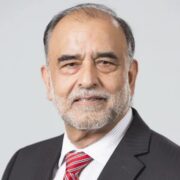
Prof Jawahar (Jay) KALRA (Canada) is the winner of the 2026 IFCC Distinguished Award for Laboratory Medicine and Patient Care, sponsored by Mindray.
This Award honours an individual who has made unique contributions in Laboratory Medicine, its application in improving patient care, and has had a worldwide impact in clinical medicine.
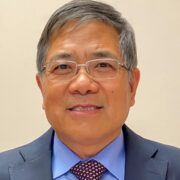
Prof. Qing H. MENG (US-Canada) is the winner of the 2026 IFCC-Robert Shaffer Award for Outstanding Achievements in the Development of Standards for Use in Laboratory Medicine co-sponsored by NIST and CLSI.
This Award recognizes specifically an individual who has made outstanding and unique contributions to the advancement of reference methods and/or reference materials for laboratory medicine to facilitate improved quality of clinical diagnostics and therapies, which would in turn lead to reduced costs and improved patient care.

Dr. Jonas GHOUSE (Denmark) is the winner of the 2026 IFCC-Gérard Siest Young Scientist Award for Distinguished Contributions in Pharmacogenetics, sponsored by Biologie Prospective.
This award recognizes an outstanding young investigator or young leader under 40 years of age for contributions to pharmacogenomics and Personalized/Precision Medicine, including impact on research, development, standardization, quality management, regulatory evaluation, or utilization in therapy.

Prof. Aylin Sepici DINÇEL (Türkiye) is the winner of the 2026 IFCC Distinguished Women Scientist Award for Contribution to In-Vitro Diagnostics, sponsored by IFCC.
This Award recognizes a woman who has made significant contributions to the development or utilization of In Vitro Diagnostics, with emphasis on applications in primary healthcare.
Congratulations to the 2026 IFCC Distinguished Awardees!
On behalf of the IFCC Executive Board and the IFCC Awards Committee
IFCC: the Young Scientists
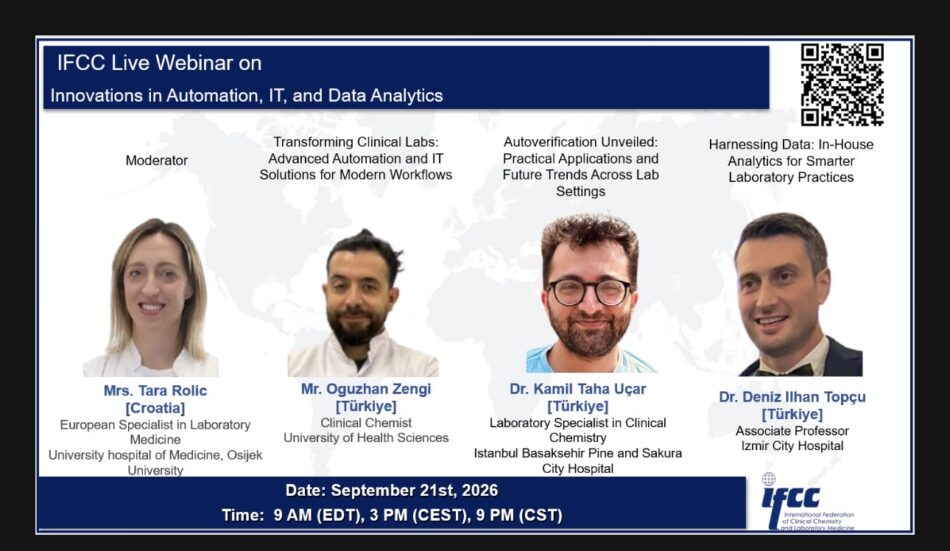
IFCC Live Webinar: Innovations in Automation, IT, and Data Analytics
By: Kamil Taha Uçar, Associate Professor of Medical Biochemistry, Istanbul Basaksehir Cam and Sakura City Hospital, Türkiye.
Tara Rolić, EuSpLM and PhD candidate at the Faculty of Medicine, University of Osijek, Croatia.
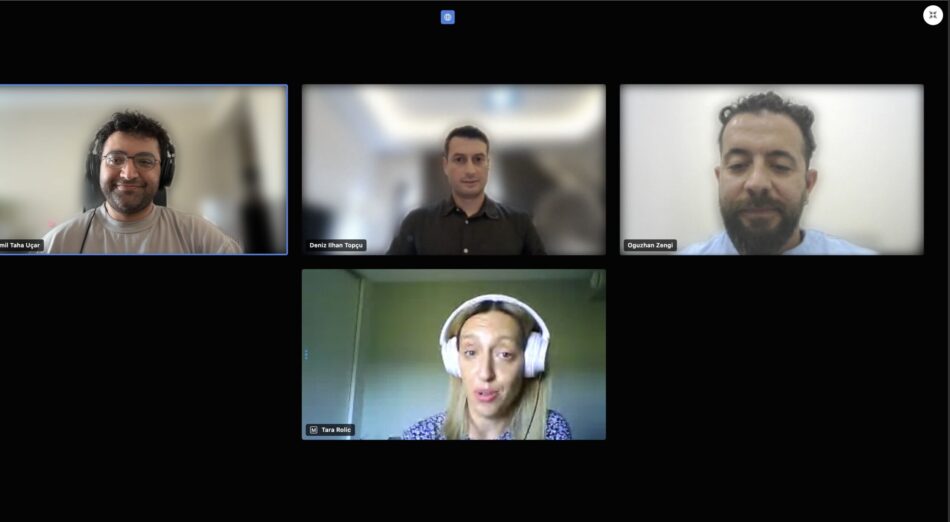
On 21 September 2026, the IFCC Live Webinar Series hosted the hot topic webinar in laboratory medicine, “Innovations in Automation, IT, and Data Analytics. „This 90-minute session brought together laboratory professionals from around the world to discuss how digital tools are reshaping everyday laboratory practice. The webinar was moderated by Tara Rolić (Croatia), EuSpLM and PhD candidate at Faculty of Medicine, University of Osijek, Chair of the EFLM Division Communication, and member of the IFCC Task Force for Young Scientists (TF-YS).
Automation and data-driven approaches are no longer limited to large laboratories. Laboratories of every size now face similar questions: how to streamline workflows, which results can safely be released without manual review, and how to turn the data into better clinical decisions. Three speakers from Türkiye addressed these questions in three interconnected presentations, moving from the physical organization and automation of laboratory workflows to the decision-making process behind the validation and release of laboratory results, and finally to the intelligent use of laboratory data.
Transforming clinical labs
Oğuzhan Zengi (Türkiye), Associate Professor of Medical Biochemistry at Başakşehir Çam and Sakura City Hospital, Istanbul, opened the programme with “Transforming Clinical Labs: Advanced Automation and IT Solutions for Modern Workflows.” His first message was simple: process comes before technology. Automation is step five of a lean redesigns, not step one, because automating a poor process only produces waste faster.
He described the laboratory as three layers working as one workflow: the track moves samples, the middleware decides, and the LIS remembers, held together by open standards such as HL7, FHIR and LOINC. Reviewing the evidence on total laboratory automation, he showed that the tail of the turnaround time distribution shrinks more than the mean (99th percentile down by 13% against 6% for the mean), which is why laboratories should “measure the tail, not the mean”. He urged participants to design for the bad day, with peak load, single points of failure, downtime and cyberattacks written into the specification, and reminded them that the laboratory owns its rules and code mappings, whoever supplied the software.
Autoverification unveiled
Kamil Taha Uçar (Türkiye), Associate Professor of Medical Biochemistry at the same hospital and TF-YS member, continued where the first talk ended with “Autoverification Unveiled: Practical Applications and Future Trends Across Lab Settings.” Starting on the principles outlined in CLSI AUTO10 and AUTO15, he guided the audience through the design, validation and staged go-live of a middleware-based autoverification system covering clinical chemistry and haematology.
Using ALT as an example, he showed how verification ranges can be built from a laboratory’s own patient percentiles, widened by the allowable analytical error, and combined with delta limits based on biological variation and state of the art goals. He then shared current performance: about 76% of clinical chemistry and immunoassay results and 77% of complete blood count panels are released automatically. Monitoring the reasons for held results proved as informative as the rates themselves; a third of clinical chemistry holds, for example, were waiting for a QC run rather than reflecting an abnormal patient result. Looking ahead, he highlighted patient-based real-time QC in the release decision, rule sets evaluated like diagnostic tests, and machine learning applied with clear guardrails.
Harnessing data in-house
Deniz İlhan Topcu (Türkiye), Associate Professor of Medical Biochemistry at İzmir City Hospital, closed the programme with “Harnessing Data: In-House Analytics for Smarter Laboratory Practices.” He opened with an orchestra tuning before a concert: the finest instruments still have to be tuned to the room, and the same is true of analysers, middleware and LIS. Commercial tools, he argued, stop where your own population starts.
He gave three examples that no vendor delivers: reference intervals derived from the laboratory’s own patients (an indirect aPTT interval of 22.9 to 32.4 s, against 23.6 to 30.6 s on the insert), autoverification rule sets exported and audited in readable form, and patient-based real-time QC tuned to local analysers. He then demonstrated through a published no-code workflow in Orange that turned 3.75 million timestamps into a monthly turnaround time report by tower and clinical unit, which led the quality committee to act and cut order-to-phlebotomy time by 17.5%.
His central message was that an in-house tool is a device, and what it owes depends on what it touches. Every tool faces five questions: validation, data quality, version control, what happens when the builder leaves, and data security. A report may need only a saved file and a quality indicator, while a tool that affects result release needs the full discipline of a laboratory-developed test. He also shared how his residents first learn to analyse data by hand before using AI tools, so they can recognise when the output is wrong. His advice for Monday morning: find out whether raw results with timestamps can leave your LIS as a file, and if not, fix that first.
The speakers agreed on a shared message: automation and data analytics should expand what laboratories can do safely, never reduce the safety margin. Rigorous validation using real patient data, continuous monitoring, data quality and clear professional ownership remain essential foundations for ensuring patient safety.
The webinar concludes with Q&A session, giving 1217 registered participants the opportunity to ask the questions. The strong attendance and active discussion reflected the growing interest of the laboratory medicine community in translating automation, IT, and data analytics into safe, effective, and measurable improvements in everyday laboratory practice.
On demand content will be soon available.
IFCC Forum for Young Scientists New Delhi 2026: The Programme Is Out!
The IFCC Task Force for Young Scientists (TF-YS) is pleased to share the programme of the 5th IFCC Forum for Young Scientists, taking place on Sunday, 25 October 2026, in New Delhi, India, just before the Opening Ceremony of IFCC WorldLab New Delhi 2026.
Young Scientists represent the future of laboratory medicine, and the Forum offers them a unique platform to present their research, develop key career skills and connect with peers from around the world.
Scientific sessions
After the Opening Session by Marie Lenski (France), twelve Young Scientists from ten countries, selected from submitted abstracts, will present their work in four sessions:
Session 1 – Diagnostic Precision and Personalized Medicine
Chairs: Udara Senarathne (Sri Lanka) & Sudip Datta (India)
- Age-Specific Serum TSH Reference Intervals in Vietnamese Children – Le Hoang Bich Nga (Vietnam)
- Can Vitamin D Improve Male Fertility? A Prospective Interventional Study in Tunisian Infertile Men – Hela Boussalem (Tunisia)
- Quantitative HBsAg as a Complementary Tool to HBV Viral Load in the Management of Chronic Hepatitis B in Cameroon – Pretty Rosereine Mbouyap Epse Mbouche (Cameroon)
Session 2 – Molecular Diagnostics
Chairs: Francisco Carrillo Ballesteros (Mexico) & Sean Campbell (Canada)
- Dual Genetic Diagnosis in a Patient with Cystinuria: Unexpected Klinefelter Syndrome Revealed by Whole Exome Sequencing and Segregation of SLC3A1 Variants – Hilal Saleh Odeh (Palestine)
- Design and Validation of Tetra-ARMS PCR Assay for Detection of CYP3A5 Polymorphisms in Nepalese Renal Transplant Recipients – Bipin Muktan (Nepal)
- Oxidative Stress, Antioxidant Status, and Gene Expression Profiling in β-Thalassemia: Comparative Evaluation of Transfusion-Dependent and Thalidomide-Treated Patients – Sumaiya Kausar Kalaigar (India)
Session 3 – Global Health Innovation
Chairs: Dipuo D. Motshwari (South Africa) & Josep Miquel Bauça (Spain)
- A Framework for Implementing Biological Age Clocks Without Survival Data: Population Recentering and Validation of a PhenoAge-Derived Model in Argentina – Gonzalo López Lodi (Argentina)
- Machine Learning-Based Prediction of Gestational Diabetes Mellitus: Evaluating the Incremental Value of Serum Irisin as a Novel Biomarker – Anjali Jha (India)
- Breast TRI-MARK (BTM): A Portable Diagnostic Device for Early Breast Cancer Detection – Biresaw Tazaye Lake (Ethiopia)
Session 4 – Laboratory Quality and Patient Safety
Chairs: Kamil Taha Uçar (Turkey) & Shruti Gupta (India)
- Implementation of a Software-Driven Quality Assurance Program for Monitoring of Glucometer Performance in a Tertiary Care Setting in Sri Lanka – Chamila Senevirathna (Sri Lanka)
- Investigating the Clinical Impact of Erroneous Calibration Factors on Abbott Alinity c Analyzers: A Multi-Step Approach – Tania Binte Hussaini (Singapore)
- An Audit on Rejected Specimens in the Biochemistry Laboratory, Lady Ridgeway Hospital for Children: A Path to Reducing Pre-Analytical Errors – Hemika Yoganathan (Sri Lanka)
Workshops and networking
The afternoon is dedicated to skills beyond the bench:
- Pitch Perfect: Communicating Your Idea in 3 Minutes – Dipuo D. Motshwari (South Africa) & Francisco Carrillo Ballesteros (Mexico) will help participants turn complex research into a clear, compelling message.
- Let’s Talk About (Office) Politics: Skills for Cultivating Hard and Soft Power – Sean Campbell (Canada) will explore how to navigate workplace dynamics and build influence.
- YS Breakout Discussions: Global Challenges, Local Solutions and IFCC Opportunities – small-group discussions on shared challenges, practical solutions and ways to get involved in IFCC.
Don’t miss the Tasting Break: Young Scientists are invited to bring a small taste of specialties from their home countries to share. The Forum closes at 16:30 with closing words and group pictures, just in time for the Opening Ceremony of IFCC WorldLab New Delhi 2026 at 17:00.
Key details
- Date: Sunday, 25 October 2026, 08:00 – 16:30
- Location: New Delhi, India, Yashobhoomi – India International Convention & Expo Center
- Fee: Free of charge for congress registrants
- Full programme: IFCC New Delhi 2026 YS Forum webpage
- Registration: Register here
Follow us: Facebook | X | LinkedIn
This amazing activity would not be possible without Prof. Tomris Özben, who initiated the Forum at its first edition in Seoul 2022, and the continuous support of the IFCC Executive Board – our warmest thanks to them!
We can’t wait to welcome you in New Delhi. See you there!

Voices of our Corporate Members
Spotlight on IFCC Corporate Members
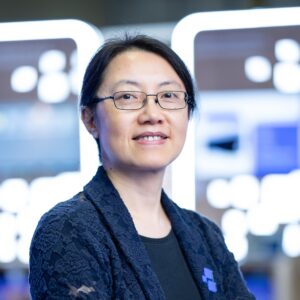
Meet Lily Li, Corporate Representative for QuidelOrtho
- How long have you been associated with IFCC?
I have been an active participant in various IFCC conferences/congresses for more than a decade. More recently since 2024, I have served as a Corporate Member in the Task Force Corporate Members (TF-CM) representing QuidelOrtho.
- What inspires you to get more involved?
I always want to get more involved in IFCC-associated programs and activities. I took the role as a Corporate Member in TF-CM, because I am fully aligned with the goal of TF-CM to strengthen the collaboration between IFCC and its Corporate Members, as well as among Corporate Members. TF-CM also allows Corporate Members to make significant contributions to IFCC activities, and to elevate key topics and priorities to advance laboratory medicine and health care.
In TF-CM, I have the opportunity to work closely with many talented representatives from other In vitro diagnostics (IVD) and medical device companies to address our common interests and challenges, and to bring innovative, safe and effective products to patients in need. In addition, there are many other task forces and working groups targeting important IVD needs, such as assay standardization/harmonization, reference interval databases, new biomarkers to fulfill unmet diagnostic needs, etc., all of which provide platform and forum for industry representatives to collaborate to advance laboratory medicine.
- What do you like most about your involvement with IFCC?
What impressed me the most is the spirit of collaboration of Corporate Members to identify and address common interests/challenges and to achieve common goals in the IVD industry.
When working on TF-CM initiatives, one of the areas the Corporate Members identified was the need to share complicated and highly regulated processes and challenges for IVD companies to bring new products onto the market. This type of knowledge, although second nature to industry scientists, may not be readily aware by academia or the end users of the products, thus, could often generate confusions why companies could not make product changes quick enough.
Realizing the need to communicate product development processes to a broader audience in the IFCC family, the TF-CM members brainstormed on key topics as well as ways to deliver the message. Some of the interesting topics include:
– New product development: from idea to patient care
– Life cycle management & Post market surveillance
– Meet Regulatory or Notified Body requirements for product clearance/approval
– What does it take to achieve assay standardization among manufactures
– Ideas have been circulated to develop webinar series on these industry specific topics. If you have additional thoughts or if you are interested in delivering any of these topics, please contact us.
- What advice do you have for other Corporate Members?
As one of the newer TF-CM members, I have more leaning experiences than advice. Since one of the objectives of TF-CM is to serve as the “voice of industry” and be more accessible to all IFCC teams and leadership, enabling a more diverse understanding and appreciation of needs among corporate members and the IFCC, this is the right forum to bring up ideas to advance laboratory medicine for the benefits of the customers and patients. So be actively involved and also to encourage your colleagues to be involved in various committees and working groups.
- Is there anything else you would like to add before we close this interview?
I feel fortunate to have the opportunity to work with a group of passionate industry professionals/leaders in the TF-CM on many important topics. It is never easy and often takes a village to make any meaningful impact, so, I am very excited about the TF-CM strategies and initiatives, and I look forward to working with all Corporate Members to enhance our partnership with IFCC and to drive advancements in laboratory medicine and patient care.
Contribute to IFCC eNews
Leadership that Empowers Multidisciplinary Teams to Improve Care for Patients Undergoing Cancer Treatments
The UNIVANTS of Healthcare Excellence program recently awarded an integrated clinical care team from Shandong Cancer Hospital and Institute, Shandong First Medical University and Shandong Academy of Medical Sciences (Jinan, China) prestigious honors for innovation, teamwork and measurably better performance. Their recently recognized best practice involving strategic application of high-sensitivity troponin into risk assessments in patients in lung cancer is just one of many programs being led by this world renown site to enhance and maximize patient outcomes.
At the core of this momentum is a leadership team that “walks the talk,” reinforcing high-quality care, exceptional experiences and unparalleled patient outcomes. To better understand and further explore the leadership culture that enables such transformational care, Tricia Ravalico, Executive Lead, UNIVANTS of Healthcare Excellence program, sat down with Professor Jinming Yu, Academician and President of Shangdong Cancer Hospital for the engaging discussion below.
- Tricia Ravalico: Can you introduce the treatment philosophy of Shandong Cancer Hospital and the core mission you have always upheld?
Prof Yu: Over the years, we have consistently adhered to the philosophy of “precision, innovation, and integration.” Thus, treating cancer is never something that can be accomplished by a single discipline or a single technology. We have abandoned the traditional single-treatment model, with MDT (multidisciplinary teams) as our core support, and innovative technologies – such as proton and heavy ion therapy as precision radiotherapy tools – we ensure that every cancer patient receives the most standardized, most scientific, and individualized optimal treatment plan, thereby maximizing the cure rate while preserving quality of life.
- TR: Could you explain the uniqueness of your hospital’s MDT system?
PY: In traditional cancer care, a single discipline diagnoses and treats the patient, resulting in a single treatment plan. Often, poor coordination between specialties can lead to overtreatment or undertreatment and easily misses the optimal treatment window. What we have built is a standardized, routine, and normalized hospital‑wide MDT system. It is not simply a multidisciplinary consultation. Our MDT brings together experts covering the entire chain: radiotherapy, chemotherapy, surgery, imaging, pathology, ultrasound, nutrition, and more. We have also set up dedicated MDT subgroups. More than 80% of our team members are high‑level professionals with overseas study experience. For over six years, we have adhered to fixed times, fixed locations, and fixed experts, providing full coverage without dead ends. We have broken disciplinary barriers, avoided treatment pitfalls, and enabled patients with complex and difficult cancers to say goodbye to blind treatment, achieving standardization, individualization, and precision throughout the entire diagnosis and treatment process.
- TR: The UNIVANTS Award for Healthcare Excellence is the world’s first international prize focusing on value‑based healthcare and translational medicine practice. It recognizes outstanding clinical teams that demonstrate multidisciplinary collaboration, laboratory‑data‑driven approaches, and measurable improvements in healthcare quality. This year, the initiative entitled “Reducing Cardiovascular Disease Morbidity and Mortality in Lung Cancer Patients through Prospective Screening and Intervention” – won the UNIVANTS Award. In Shandong Cancer Hospital’s MDT practice, what successful experiences and practices do you have in improving healthcare quality and enhancing healthcare performance?
PY: I believe our hospital’s MDT model – driven by administrative leadership, guaranteed by systems, covering all patients, and free of charge – has become a benchmark in China for improving cancer care quality and elevating treatment standards. Our pioneering MDT model covers all cancer patients in the hospital, truly achieving full coverage without blind spots. At the same time, we have built a telemedicine platform to reach primary hospitals. From case screening, expert discussion, plan formulation, implementation supervision, to treatment response feedback, we have formed a complete closed‑loop process. The expert panel is dynamically adjusted, a young expert echelon has been established, and AI tools are introduced to enhance quality control. MDT runs through the entire cycle: diagnosis, treatment, rehabilitation, and follow‑up. The results have been remarkable, with improvements in both quality of care and treatment outcomes. For over six years, patient outcomes under MDT have been better than those under traditional models. Cumulatively, we have saved patients over 200 million RMB in treatment costs. The number of newly diagnosed patients has increased from 29,000 to 51,000, with an average annual growth of 20%. More than 50,000 patients have come from other provinces, with over 15,000 hospitalizations – ranking first in Jinan and earning patient recognition. We have also been recognized as a national advanced model and a provincial benchmark, driving the MDT rate across the province to exceed 40% and promoting homogenization of regional diagnosis and treatment.
- TR: This award highlights the importance of managing adverse cardiovascular events during cancer treatment. What does this mean for cancer patients and oncologists? And what impact will it have on the future development of cancer treatment in China?
PY: Emphasizing the management of cardiovascular adverse events in cancer treatment has far‑reaching significance. First, it improves survival and reduces mortality risk by preventing treatment interruptions and ensuring completion of the full course. Effective management of cardiotoxicity prevents premature discontinuation of cancer treatment, lowers long‑term mortality (cardiovascular disease has become the second leading cause of death), and enables early intervention for high‑risk myocarditis, saving lives. Second, it safeguards quality of life and reduces chronic disease burden, avoiding repeated hospitalizations and alleviating patient burden. Third, it ensures safety throughout the treatment cycle, protecting heart health, standardizing treatment, reducing risks, and minimizing disputes. It breaks down barriers and promotes multidisciplinary collaboration, with AI early warning and data‑supported research. At the industry level, it will foster the emergence of the discipline of cardio‑oncology, establish consensus, fill gaps, incorporate cardiac safety into efficacy endpoints, drive the development of less toxic new drugs, and enable precision and intelligence. It moves prevention forward, supports tiered diagnosis and treatment, benefits millions of patients, and promotes high‑quality development.
- TR: Your hospital has deeply integrated MDT with cutting-edge proton and heavy ion radiotherapy, creating a unique treatment model. Please share the core value of this integrated model?
PY: Cutting-edge technology must be paired with standardized, appropriate care in order to benefit patients. Accordingly, we adhere to the dual-precision model: MDT-based precise patient selection + precise proton therapy. Proton radiotherapy is an advanced technology, but it is not suitable for everyone. Thus, a dedicated MDT team rigorously evaluates indications, and provides full-process oversight to prevent overtreatment and ensure optimal treatment plans.
Interested in learning more about this best practice and their outcomes? Please visit www.UnivantsHCE.com
About Professor Yu: Professor Jinming Yu is the President of Shangdong Cancer Hospital and a Member of the Chinese Academy of Engineering (CAE), one of the highest lifetime academic honors in China, comparable to being elected to the U.S. National Academy of Medicine or Engineering. Academicians in China are highly influential leaders in medicine, research, and healthcare policy. Professor Yu is a nationally recognized oncology expert and President of Shandong Cancer Hospital, with strong influence on cancer clinical practice, research collaboration, and adoption of innovative diagnostic technologies in China

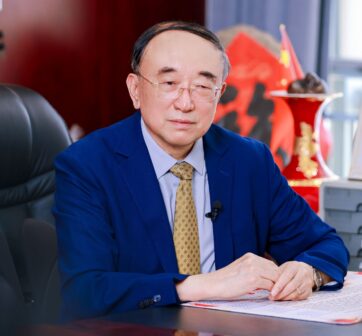

News from Regional Federations and Member Societies
News from the Japan Society of Clinical Chemistry (JSCC): 2025 Technology Award
by Hideo Sakamoto, Ph.D. International Exchange Committee of JSCC
Japan Society of Clinical Chemistry (JSCC) Technology Award is presented to an individual who has made outstanding technological advances in clinical chemistry. In 2025, Satoshi Kojima, Ph.D., won the JSCC Technology Award. At the 65th Annual Meeting of the JSCC in Nagoya, Japan, held November 7 to 9, 2025, Dr. Takashi Miida, President of JSCC, congratulated the award winner, Dr. Kojima, for his team’s work in clinical chemistry.
We, JSCC, proudly introduce the 2025 JSCC Technology Award winner in this issue and share his team’s outstanding work.
Dr. Kojima received the 2025 JSCC Technology Award on behalf of the team for “Development of Mass Spectrometry-Traceable Aldosterone Assay Reagents: “Lumipulse® Aldosterone” and “Lumipulse® Presto Aldosterone”. The award‑winning team consists of Tatsunari Yoshimi, Ph.D., Takuya Sakyu, M.S., M.B.A., and Kyoko Teruyama, M.S., of the Research and Development Division, Fujirebio Inc.
Aldosterone is a mineralocorticoid hormone that regulates sodium and potassium levels as well as blood pressure. Plasma Aldosterone Concentration (PAC), especially the primary aldosteronism, must be measured for diagnosing hypertension. PAC is a key marker for managing endocrine disease.
Japan had used SPAC-S Aldosterone, which is a competitive immunoassay based on labeled and sampled aldosterone. However, the sensitivity, reproducibility, and cross-reactivity of competitive assays are limited. The accuracy of SPAC-S is low at low aldosterone concentrations, and SPAC-S tends to report higher values than LC-MS/MS, which is the gold standard.
Fujirebio Inc. developed a high-sensitivity sandwich immunoassay to overcome these issues. The development of this immunoassay began with generating a mouse monoclonal anti-aldosterone antibody, followed by creating an anti-metatype antibody that specifically binds the immunocomplex of aldosterone and primary antibody using ex vivo antibody generation techniques. These innovations enabled the development of two fully automated kits: Lumipulse G Aldosterone and Lumipulse Presto Aldosterone. They are highly sensitive and precise even at low PAC levels. The results are traceable to NMIJ CRM6402a, the first kits with this traceability. These kits produce results equivalent to those obtained using LC-MS/MS.
These PAC assays substantially contributed to updating screening and functional confirmation criteria for primary aldosteronism in the “2021 Guidelines for the Diagnosis and Treatment of Primary Aldosteronism.” Lumipulse Presto Aldosterone is intended for the Japanese market only and is not available internationally, while Lumipulse G Aldosterone also achieved European IVDR approval, promising global contributions to hypertension and endocrine disease management.
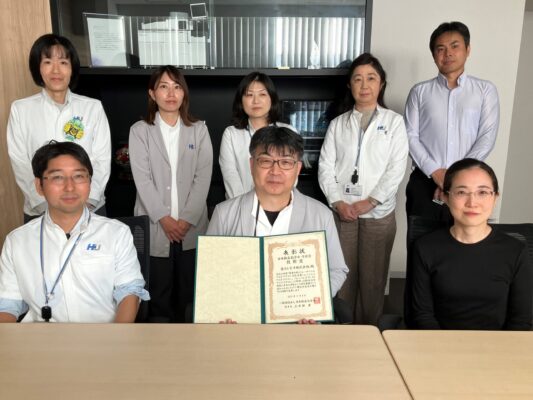
Chile Advances the National Development of Reference Intervals in Laboratory Medicine
By Marcelo León M.
Coordinator of Working Group RI- Chile
On August 17th, 2026, the pre-congress course “Reference Intervals in the Clinical Laboratory: From International Standards to Big Data and Multicenter Projects”was held at the Conference Hall of the Institute of Public Health of Chile (Instituto de Salud Pública de Chile). Organized by the Chilean Society of Clinical Chemistry (Sociedad Chilena de Química Clínica, SCHQC) as part of the 22nd Chilean Congress of Clinical Chemistry, the course brought together clinical laboratory professionals from different regions across the country. Using a combined theoretical and hands-on approach, the course aimed to strengthen competencies in the management, verification, and estimation of reference intervals by integrating regulatory, statistical, clinical, and data-analysis principles applicable to the institutional realities of clinical laboratories.
Throughout the course, participants explored the clinical relevance of reference intervals, their distinction from clinical decision limits, the principles underlying the selection of reference populations and partitioning according to age and sex. The limitations of the direct approach and conventional reference interval verification were also discussed, together with the CLSI EP28-A3c guideline, ISO 15189:2022 requirements, and the potential risks associated with the uncritical adoption of reference intervals provided by reagent manufacturers.
A major focus of the program was the use of routine laboratory data and indirect methods for reference interval estimation. Statistical approaches including the Hoffmann, Bhattacharya, and TML methods were reviewed, together with computational tools such as refineR, reflimR, and R. International experiences and initiatives associated with IFCC C-RIDL, CALIPER, EuroMedLab, and WorldLab were also presented. The program concluded with a hands-on workshop focused on data cleaning, analysis, and interpretation.
The course was developed as a complementary activity to the national project “National Multicenter Study: Determination and Validation of Clinically Relevant Reference Intervals in the Chilean Population Using the Indirect Method.” The initiative seeks not only to advance the generation of nationally relevant evidence, but also to build sustainable capacity within clinical laboratories to assess, verify, and establish local reference intervals according to their patient populations, analytical methods, and institutional contexts.
The faculty included Alan Carvalho Dias (Brazil), Pablo Letelier Arias, Wilder Prado Pacci, Paulina Ruiz Rojas, Carolina Salas Palma, and José Patricio Miranda, bringing together expertise in reference intervals, biostatistics, data science, laboratory information systems, quality management, research, precision medicine, and clinical interpretation.
The participation of professionals from different regions of Chile reinforced the national and collaborative nature of the initiative, contributing to the development of sustainable capabilities for a more appropriate and evidence-based application of reference intervals in Chilean laboratory medicine.
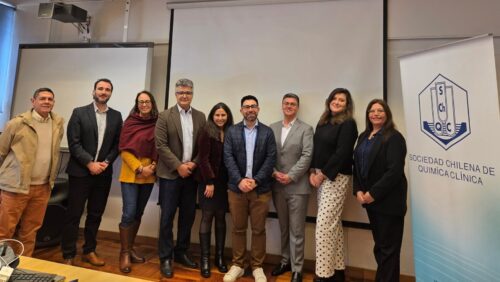
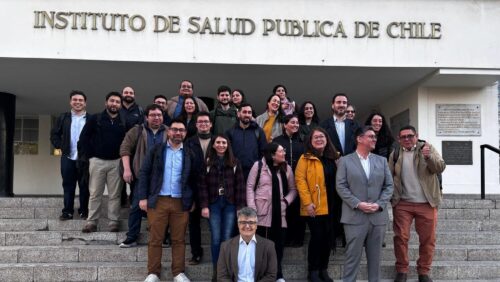
News from Spain: Experts highlight role of the clinical laboratory in the consistent and equal implementation of prenatal screening for chromosomal anomalies in the National Health System

*The Consensus Document, approved by the Public Health Commission in June, sets out common recommendations for the various stages of the process and establishes requirements to ensure test quality
*SEMEDLAB’s participation reinforces the clinical laboratory’s role in the quality, reliability, and comparability of the results supporting fetal chromosomal risk assessment
The Spanish Society of Laboratory Medicine (SEMEDLAB) highlights the importance of the Consensus Document for the development and implementation of the National Health System’s (SNS) population-based prenatal screening program for chromosomal anomalies, aiming to advance the standardization of prenatal screening programs and reduce disparities in their application across centers and autonomous communities.
The Document—prepared by the Working Group on the Prenatal Screening Program for Chromosomal Anomalies of the Public Health Commission’s Population Screening Panel—establishes requirements and recommendations for the program’s various stages. These range from organization and coordination to target population recruitment, information provision and informed consent, test performance and interpretation, diagnostic confirmation, genetic counseling, and continuous evaluation. It was approved by the Population Screening Panel on May 19, 2026, and by the Public Health Commission on June 11, 2026.
A common framework to ensure equity in prenatal screening
Dr. Paula Argente del Castillo, a member of SEMEDLAB’s Maternal-Fetal Medicine Commission, and Dr. Carla Ramírez, a member of the Society’s Board of Directors, participated in the review of the Document. Its primary objective is to establish common criteria to unify and standardize prenatal screening for chromosomal anomalies within the healthcare system, defining the tests to be used, and ensuring the quality of ultrasound, biochemical, and genetic processes, as well as defining clear, safe, care pathways for managing results and making informed decisions.
As the specialists explain, the document aims to ensure that “all pregnant women have access to a screening program that is consistent, equitable, and based on quality criteria, regardless of their place of residence.” It also establishes that participation in screening must be voluntary and based on clear, understandable, and sufficient information.
Key contributions include categorizing first-trimester combined screening results into three risk levels—high, intermediate, and low. This classification allows for standardized decision-making, the incorporation of contingent screening using cell-free DNA (cfDNA) for women at intermediate risk, and the optimization of referrals for invasive testing.
“One of the most significant contributions is precisely this risk stratification, which allows clinical management to be organized based on the results obtained and establishes recommended actions for high-risk situations,” the specialists note.
Analytical quality: an essential element of the program
For SEMEDLAB, the involvement of Laboratory Medicine specialists has been crucial in ensuring the reliability and comparability of the analytical results that underpin individual risk assessment—and, consequently, the clinical decisions derived from screening.
The Society’s contribution focused on reviewing the document and reinforcing aspects related to the program’s analytical quality. Emphasis was placed on the need for laboratories to implement standardized procedures, quality assurance systems, and periodic process monitoring to guarantee the reliability, traceability, and accuracy of results. “These contributions are fundamental to ensuring that risk stratification and clinical decisions derived from screening are based on robust analytical results that are comparable across centers,” both doctors highlight.
The document establishes requirements covering every phase of the analytical process: from the proper collection, identification, transport, and processing of samples to the use of validated reagents and software, the metrological traceability of laboratory tests, and the use of scientifically backed risk-calculation algorithms. It also underscores the importance of internal controls and participation in external quality assessment programs.
From biochemical screening to confirmatory diagnosis
The clinical laboratory plays a key role throughout the various stages of managing fetal chromosomal abnormalities. Primary laboratory tests include maternal biochemical markers used in combined first-trimester screening—specifically free β-hCG and PAPP-A. When integrated with ultrasound and maternal data, the results of these tests allow for the calculation of an individual’s risk regarding major fetal trisomies.
For pregnant women at intermediate risk, the work of laboratory medicine specialists is crucial—both in analyzing cell-free DNA in maternal blood (a contingent or second-line screening test) and in performing invasive diagnostic techniques. In specific situations, these techniques allow for the confirmation of detected or suspected chromosomal abnormalities; they include fetal karyotyping, QF-PCR, and microarray analysis.
According to both specialists, the adoption of these new technologies must be accompanied by high standards of analytical quality, method validation, standardized procedures, traceability, and quality control programs.
A model based on inter-specialty collaboration
This consensus represents a significant step toward standardizing prenatal screening for chromosomal abnormalities in Spain by offering agreed-upon recommendations aimed at reducing the variability that currently exists between autonomous communities and healthcare centers.
In this model, collaboration between specialists in Obstetrics and Gynecology and those in clinical laboratories is essential for the rigorous, coordinated integration of clinical, ultrasound, and analytical data. “This collaboration ensures a diagnostic process that is coherent, accurate, and compliant with the quality standards required for managing fetal chromosomal abnormalities,” conclude Dr. Argente del Castillo and Dr. Ramírez.
Sociedad Española de Medicina de Laboratorio (SEMEDLAB)
LINKEDIN SEMEDLAB SEQC-MLSEQC-MLSEQC-ML
FACEBOOK Sociedad Española de Medicina de Laboratorio – Semedlab

NatForLab 2026: Building a National Platform for the Future of Laboratory Medicine in Kazakhstan
Astana, Kazakhstan — September 2026
Laboratory medicine is changing rapidly. New technologies, automation, artificial intelligence and advanced diagnostics are transforming laboratory practice. At the same time, health systems face a fundamental question: how can laboratory medicine develop as an integrated part of healthcare rather than as a collection of individual laboratories and technologies?
This question was at the heart of the VIII National Forum of Laboratory Medicine — NatForLab 2026 — held in Astana, Kazakhstan, on 18–19 September 2026.
Organized by the Federation of Laboratory Medicine (FLM) of Kazakhstan, the Forum brought together approximately 1,000 laboratory professionals, healthcare leaders, experts and representatives of the international laboratory medicine community. Speakers and participants from around 20 countries contributed to discussions on the current challenges and future development of laboratory medicine.
For FLM, NatForLab is intended to be more than an annual scientific meeting. It is being developed as a national professional platform connecting laboratory specialists, clinicians, healthcare managers, policymakers, international organizations and industry around common priorities for laboratory medicine.
One of the key themes emerging from the Forum was the need to strengthen laboratory medicine at the system level. Quality cannot depend only on the performance of an individual laboratory. It requires appropriate infrastructure, competent professionals, harmonized standards, effective quality management, digital connectivity, rational use of laboratory tests and strong communication between the laboratory and clinical teams.
Another important priority is regional development. Kazakhstan has a large geographical territory and significant differences in healthcare resources between regions. Strengthening regional laboratory capacity and creating sustainable professional networks are therefore essential for equitable access to reliable diagnostics.
The Forum also highlighted the importance of a new generation of laboratory professionals. A young organizing and technical team worked alongside experienced leaders, demonstrating how intergenerational collaboration can create a new professional culture and a more forward-looking vision for laboratory medicine.
“The future of laboratory medicine is not only about introducing new technologies. It is about building a system in which every laboratory result contributes to a clinical decision and ultimately to better patient care. We need strong professional communities, international collaboration and a clear national vision for laboratory medicine,” said Zhanar Nurlanovna Suleimenova, President of the Federation of Laboratory Medicine of Kazakhstan.
The next step for FLM is to transform the momentum of NatForLab into a continuing platform for regional development, professional education and international cooperation. The ambition is to create opportunities for Kazakhstan and Central Asia to share experience while also contributing to the global laboratory medicine community.
NatForLab 2026 therefore represents not simply a successful national meeting, but a continuing conversation about what laboratory medicine should become — and how professional communities can help shape its future.
The views expressed in this article are those of the author and do not necessarily represent the views of the International Federation of Clinical Chemistry and Laboratory Medicine (IFCC).

Advancing Laboratory Medicine for Better Patient Care
Working behind the scenes, Chemical Pathologists engaged in the crucial sphere of Laboratory Medicine may not make the headlines. However, a laboratory result will determine good health or disease be it diabetes, kidney disease, a hormonal disorder, a heart attack, cancer or an inherited metabolic condition and may very well be a life-and-death matter for a patient.
The value of a test lies not just in producing a number but in the expertise of Chemical Pathologists who will select the right test, advice to handle the sample correctly and with care, decide the reliable analysis and interpret the result in the clinical context.
Currently, Sri Lanka has 36 board-certified Consultant Chemical Pathologists serving in National hospitals, teaching hospitals, district general hospitals and university faculties. This number may be small, but their work covers a wide area. They support clinicians in selecting and interpreting tests, investigate unusual or conflicting results, contribute to teaching and help develop laboratory services across the country.
Established in 2015, the College of Chemical Pathologists of Sri Lanka (CCPSL) represents Specialists in Chemical Pathology and works to improve laboratory practice through education, research, quality improvement and professional collaboration.
Wide ranging were the vital issues discussed at the 11th Annual Academic Sessions of the CCPSL held on July 10 and 11, 2026 at the Shangri-La Hotel, Colombo.
The two-day sessions on the theme ‘Quality, Innovation and Interdisciplinary Collaboration in the Era of Personalised Medicine’ were held under the auspices of the International Federation of Clinical Chemistry and Laboratory Medicine (IFCC) and the Asia-Pacific Federation for Clinical Biochemistry and Laboratory Medicine (APFCB).
The inauguration of the sessions was graced by Chief Guest, Hon. Dr Nalinda Jayatissa, Minister of Health and Mass Media, and Guest of Honour, Professor Jayantha Balawardane.
While the President of the College, Dr Ganga Withana Pathirana, delivered the Presidential Address, the programme included felicitation awards and the conferment of college fellowships and other academic honours.
Reviewing developments in the diagnosis and treatment of metabolic bone disease, the 2026 CCPSL Oration on ‘Advances in Bone Metabolism: From Genetic Disorders to Targeted Therapy – Bon(e) Voyage’ was delivered by Dr Samuel Vasikaran of PathWest Laboratory Medicine, Western Australia.
The sessions brought together chemical pathologists, clinicians, medical laboratory scientists, postgraduate trainees, researchers, international speakers and industry representatives.
The important topics discussed, meanwhile, ranged from cardiac biomarkers, lipid disorders and kidney disease to tumour markers, diabetes, inherited metabolic disease, metabolic bone disease, toxicology and point-of-care testing.
With robust discussion around laboratory management, quality assurance, accreditation, traceability, assay performance, automation, ethics and measurement uncertainty, the scientific programme also dealt with problems encountered in day-to-day clinical practice. These brought into focus the use of troponins in suspected heart attacks, newer approaches to lipid testing, biochemical investigation of neurological disease, renal stones, chronic kidney disease, tumour markers, continuous glucose monitoring and childhood hormonal and metabolic disorders.
Turning the spotlight on what happens behind the scenes in a laboratory, there was emphasis on how patient preparation, sample collection, transport, analytical performance, reporting and interpretation, going beyond the analyser, all matter in securing reliable results. A failure at any of these stages can delay diagnosis or lead to wrong treatment.
The need for better communication between laboratory professionals and clinical teams was also highlighted, especially important when results are unexpected, contradictory or difficult to explain.
With the sessions providing a good opportunity for younger professionals to discuss their work and highlight practical problems in laboratory medicine, postgraduate trainees and researchers presented original research, audits, case reports and case series.
Among the other activities was a separate programme for medical laboratory scientists which included sessions on metrological traceability, diabetes testing, quality indicators, electrolyte disorders, lipid testing, laboratory ethics, thyroid function, automation, assay interference, therapeutic drug monitoring, tumour markers and accreditation.
The two-day industrial exhibition which ran parallel to the academic sessions allowed participants to view current laboratory technologies and speak with industry representatives about analytical systems, automation, reagents, point-of-care devices and laboratory information systems. It also provided an opportunity for them to consider how new technologies may be introduced to local services in a practical and responsible manner.
The academic sessions – while highlighting that Laboratory Medicine is not about performing more tests or buying newer equipment but using laboratory information well – strengthened the pathway for patients to get the right test at the right time, with a trustworthy result that has been interpreted accurately.
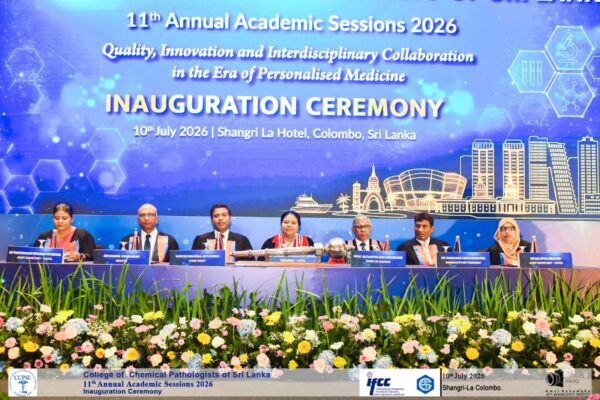
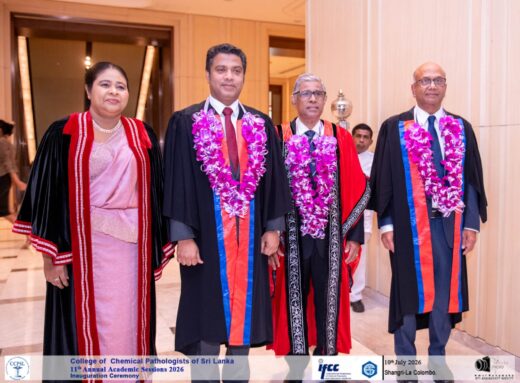

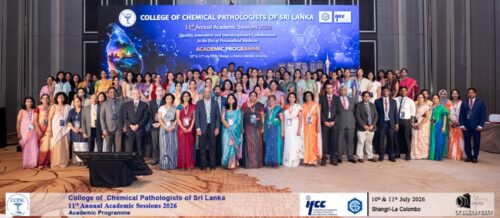
Scientific Tribute Conference Honors the Legacy of Dr. Osama Al-Najjar
More than 1,300 Laboratory Medicine Professionals together in Ramallah
By: Rana Khanafsa, IFCC National Representative – Palestinian Medical Technology Association
Ramallah, Palestine – 10 July 2026 – The Palestinian Medical Technology Association (PMTA) organized a major scientific conference in Ramallah under the theme “Scientific Tribute Conference to Honor the Legacy of Founding Leader Dr. Osama Al-Najjar.” The event brought together approximately 1,300 laboratory medicine professionals and PMTA members from Jerusalem, Ramallah and Al-Bireh, Jericho, Salfit, and other Palestinian governorates.
Held at the headquarters of the Palestine Red Crescent Society, the conference represented an important national platform for continuing professional development, scientific exchange, and strengthening the role of laboratory medicine in patient care.
The event drew Palestinian Minister of Health Dr. Majed Abu Ramadan, Deputy Minister of Health Dr. Wael Al-Sheikh, PMTA representatives, leaders of Palestinian health professional associations, and a wide range of academic, professional, and scientific figures.
In his address, the Minister of Health praised PMTA’s continuing scientific activities and highlighted the essential contribution of laboratory professionals to the healthcare system. He also announced that the Ministry of Health would officially recognize the best scientific paper presented by a young laboratory professional, emphasizing the importance of encouraging research and supporting the next generation of scientists.
PMTA President Samer Abu Najmeh highlighted the importance of professional unity and expressed appreciation for laboratory professionals working under particularly difficult circumstances in the Gaza Strip. He emphasized PMTA’s commitment to supporting its members, advancing the profession, and maintaining scientific and professional collaboration across all Palestinian governorates.
Dr. Ayman Al-Najjar, President of the Conference and Chair of its Scientific Committee, stressed that continuing education and specialized scientific lectures are fundamental to developing laboratory medicine.
“The patient’s interest must remain above all considerations. Laboratory medicine is a professional responsibility that we have accepted, and we must always strive to be worthy of it,” he said.
The scientific program featured four specialized lectures delivered by Prof. Amer Jawaireh, Dr. Yacoub Al-Ashhab, Dr. Suheir Abdeen, and Dr. Ziad Abu Khaizaran. The sessions addressed contemporary scientific and professional topics relevant to laboratory practice and attracted strong engagement from participants.
The conference placed particular emphasis on supporting young professionals. Three scientific papers were presented in the young scientist’s category by Hanadi Al-Khatib, Ahmad Jaffal, and Hiba Al-Sulaibi. Following evaluation by an independent scientific committee, Ahmad Jaffal received the “Founding President Dr. Osama Al-Najjar Award for Scientific Excellence.”
The conference also highlighted ongoing cooperation between professional associations, universities, healthcare institutions, and the private laboratory sector in promoting scientific education and professional development.
By combining continuing education, scientific competition, professional leadership, and recognition of young laboratory scientists, the conference reflected PMTA’s commitment to advancing laboratory medicine in Palestine while preserving the scientific and professional legacy of its founding leaders.
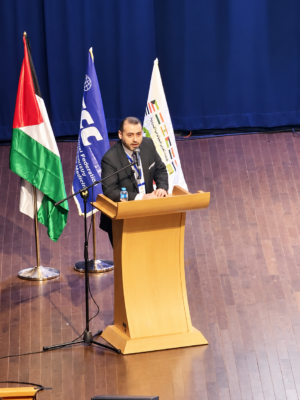
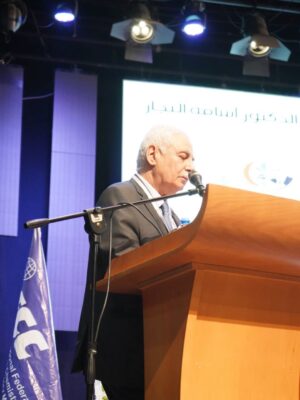

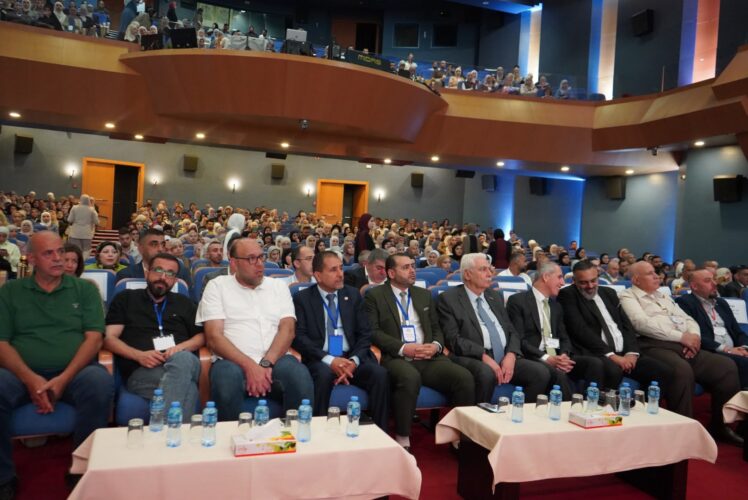
IFCC’s Calendar of Congresses, Conferences & Events
IFCC and Regional Federation Events
| XXVII COLABIOCLI 2026 | Santa Cruz, BO | 2026-10-07 | 2026-10-10 | View event | |
| IFCC WorldLab New Delhi 2026 Satellite Meeting – New development and opportunities for POCT with a focus on developing countries | New Delhi, IN | 2026-10-24 | 2026-10-24 | View event | |
| XXVII IFCC WORLDLAB 2026 | New Delhi, IN | 2026-10-25 | 2026-10-29 | View event | |
| IFCC WorldLab New Delhi 2026 Satellite Meeting – Building Your First AI Model: A Practical Session | Delhi, IN | 2026-10-25 | 2026-10-25 | View event | |
| EuroMedLab 2027 – Jointly organized by IFCC and EFLM in collaboration with LabMedUK 2027 of the Association for Laboratory Medicine | London, UK | 2027-05-16 | 2027-05-20 | View event | |
| APFCB 2027 KUALA LUMPUR | Kuala Lumpur, MY | 2027-10-10 | 2027-10-13 | View event | |
| XXVIII IFCC WORLDLAB 2028 | Buenos Aires, AR | 2028-10-15 | 2028-10-19 |
Other events with IFCC auspices
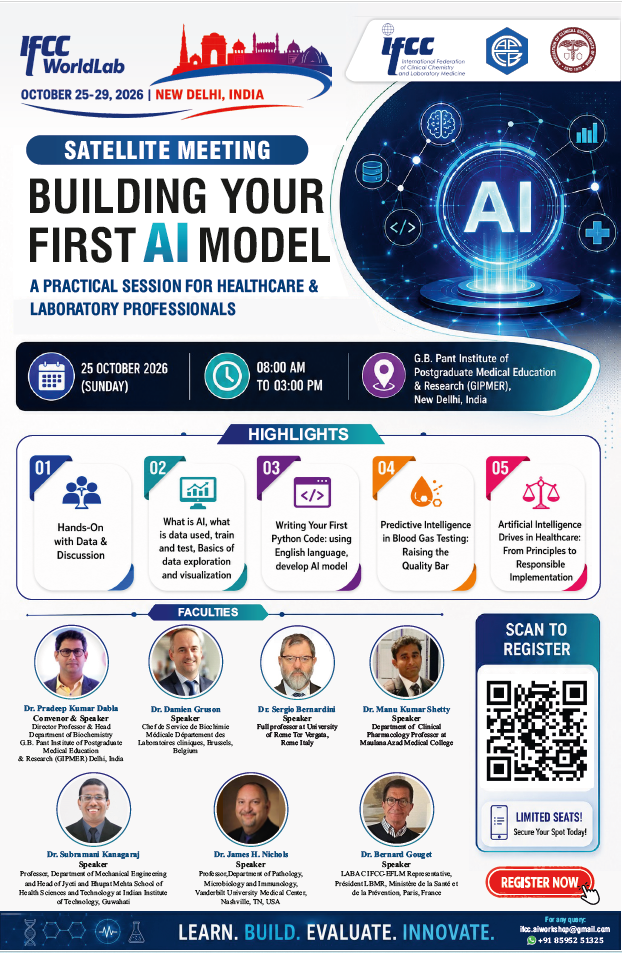

Advertise in IFCC eNews!
Showcase your products and initiatives to more than 57.000 laboratory medicine specialists throughout Europe, North America, Asia- Pacific, Middle East, Africa and Latin America: laboratory directors, clinical chemists, and other clinical laboratory specialists and technologists, leading manufacturers, distributors and dealers in the field.
- Ten issues per year
- Free-of-charge to readers
- Interactive digital edition
Published ten times a year:
- No 1/2 January/February
- No 3 March
- No 4 April
- No 5 May
- No 6 June
- No 7/8 July/August
- No 9 September
- No 10 October
- No 11 November
- No 12 December
For prices, formats and any further information on how your company can gain unique access\to international markets through advertsing with IFCC, please email us at enews@ifcc.org.
IFCC Corporate Members receive a 25% discount on current prices
IFCC Executive Board 2024-2026

Tomris Ozben
President
Nader Rifai
President Elect

Sergio Bernardini
Secretary

Alexander Haliassos
Treasurer

Tricia Ravalico
Corporate Representative
Regional Representatives

R. ERASMUS
African Federation of Clinical Chemistry (AFCC)

M. GERMANOS
Arab Federation of Clinical Biology (AFCB)

T. BADRICK
Asia-Pacific Fed for Clin Biochem and Lab Med (APFCB)

T. ZIMA
European Fed of Clin Chem and Lab Medicine (EFLM)
E. FREGGIARO
Latin-American Confederation of Clin Biochemistry (COLABIOCLI)

S. HAYMOND
North American Fed of Clin Chem and Lab Med (NAFCC)
IFCC Divisions and C-CC Chairs

C. COBBAERT (NL)
Scientific Division
Chair

V. STEENKAMP (ZA)
Education and Management Division Chair

HP BHATTOA (HU)
Communications and Publications Division Chair
D. GRUSON (BE)
Emerging Technologies Division
Chair

P. LAITINEN (FI)
Congresses and Conferences Committee Chair
IFCC Office Staff
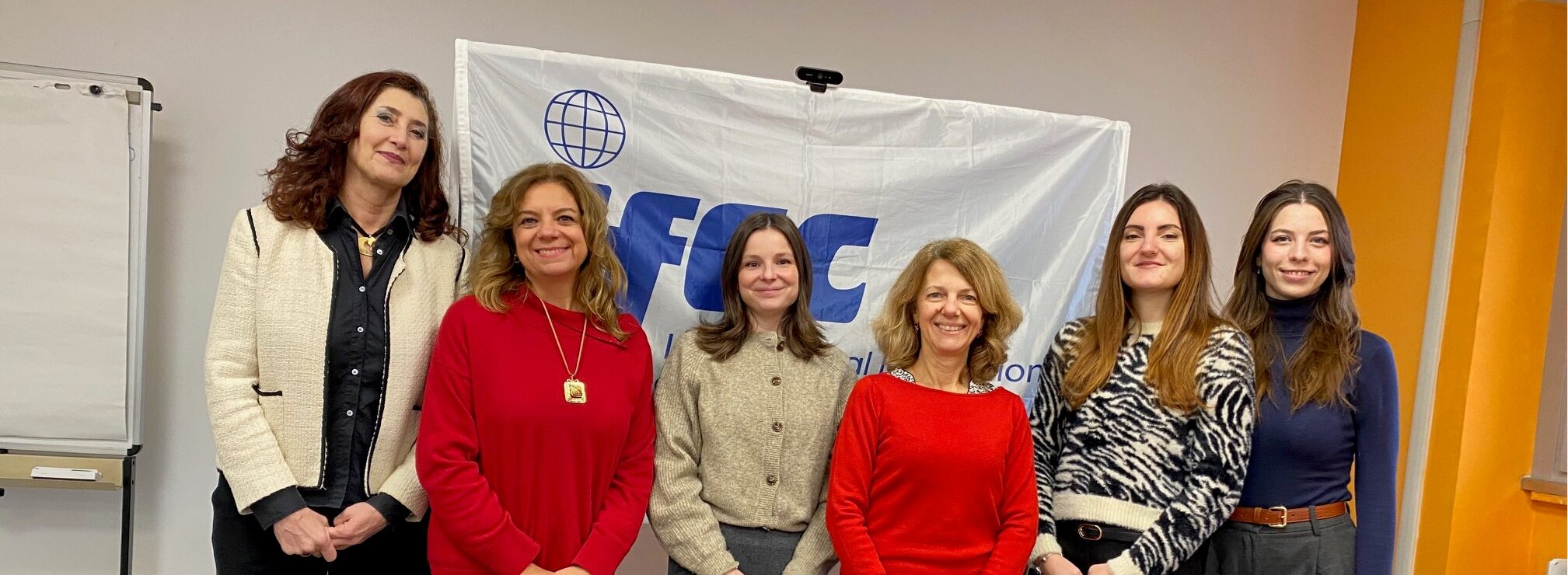
IFCC Membership
Full members
- Albania (AL) – ASoLaM
- Algeria (DZ) – SABC
- Argentina (AR) – CUBRA
- Armenia (AM) – AMLDS
- Australia and New Zealand (AU/NZ) – AACB
- Austria (AT) – ÖGLMKC
- Azerbaijan (AZ) – ASCLS
- Belgium (BE) – RBSLM
- Bolivia (BO) – SOBOBIOCLI
- Bosnia Herzegovina (BA) – AMBBIH
- Brazil (BR) – SBAC
- Brunei Darussalam (BN) – BAMLS
- Bulgaria (BG) – BSCL
- Burundi (BI) – ANTEBBU
- Cameroon (CM) CSBC
- Canada (CA) – CSCC
- Chile (CL) – SCHQC
- China (Beijing) (CN) – CSLM
- China Region (Taipei) (TW) – CACB
- Colombia (CO) – CNB
- Croatia (HR) – HDMBLM
- Cuba (CU) – SCPC
- Cyprus (CY) – ACLCY
- Czech Republic (CZ) – CSKB
- Denmark (DK) – DSKB
- Dominican Republic (DO) – CODOBIO
- Ecuador (EC) – SEBIOCLI
- Egypt (EG) – EALQPS
- Estonia (EE) – ELMU
- Ethiopia (ET) – EMLA
- Finland (FI) – SKKY
- France (FR) – SFBC
- Georgia (GE) – GLMA
- Germany (DE) – DGKL
- Greece (GR) – GSCC-CB
- Guatemala (GT) – AQBG
- Hong Kong, China Region (HK) – HKSCC
- Hungary (HU) – MLDT
- Iceland (IS) – ISLM
- India (IN) – ACBI
- Indonesia (ID) – HKKI
- Iran (IR) – IAB
- Iraq (IQ) – ISMBG
- Ireland (IE) – ACBI
- Israel (IL) – ISCLS
- Italy (IT) – SIBioC
- Japan (JP) – JSCC
- Jordan (JO) – JSMLC
- Kenya (KE) – CCAK
- Korea (KR) – KSCC
- Kosovo (XK) – KACC
- Kuwait (KW) – KACB
- Latvia (LV) – LLSB
- Lebanon (LB) – SDBLB
- Libya (LY) – LACP
- Lithuania (LT) – LLMD
- Luxembourg (LU) – SLBC
- Malawi (MW) – MAMLS
- Malaysia (MY) – MACB
- Mauritania (MR) – SMBC
- Mexico (MX) – CMCLABC
- Moldova (MD) – AMLRM
- Montenegro (MNE) – MACC
- Morocco (MA) – SMCC
- Myanmar (MM) – MMTA
- Nepal (NP) – NAMLS
- Netherlands (NL) – NVKC
- Nigeria (NG) – ACCN
- North Macedonia (MK) – MSMBLM
- Norway (NO) – NSMB
- Pakistan (PK) – PSCP
- Palestine (PS) – PMTA
- Panama (PA) – CONALAC
- Paraguay (PY) – ABP
- Peru (PE) – AMPPC
- Philippines (PH) – PAMET
- Poland (PL) – PTDL
- Portugal (PT) – SPML
- Romania (RO) – RALM
- Russia (RU) – FLM
- Saudi Arabia (SA) – SSCC
- Senegal (SN) – 2SBC
- Serbia (SRB) – DMBS
- Singapore (SG) – SACB
- Slovak Republic (SK) – SSKB
- Slovenia (SI) – SZKKLM
- South Africa (ZA) – SAACB
- Spain (ES) – SEMEDLAB
- Sri Lanka (LK) – ACBSL
- Sudan (SD) – SSCB
- Sweden (SE) – SSCC
- Switzerland (CH) – SSCC
- Syrian Arab Republic (SY) – SCLA
- Thailand (TH) – TSCP
- Tunisia (TN) – STBC
- Türkiye (TR) – TBS
- Ukraine (UA) – ACCLMU
- United Arab Emirates (UAE) ECCS
- United Kingdom (UK) – ALM
- United States (US) – ADLM
- Uruguay (UY) – ABU
- Vietnam (VN) – VACB
- Zambia (ZM) – BSZ
- Zimbabwe (ZW) – ZACB
Corporate members
- Abbott Laboratories
- Agappe Diagnostics Ltd
- Arkray Inc.
- Autobio Diagnostics Co. Ltd.
- BD Diagnostics-Preanalytical Systems
- Beckman Coulter, Inc.
- Beijing Wantai Biological Pharmacy Enterprise Co. Ltd.
- Bio-Rad Laboratories
- BioMérieux
- Boditech Med Inc.
- The Binding Site Group Ltd.
- Controllab
- Diagnostica Stago
- DiaSys Diagnostic Systems Gmbh
- Et Healthcare Inc.
- Fujifilm Wako Pure Chemical Corporation
- Fujirebio-Europe
- Gentian As
- Getein Biotech Co., Ltd.
- Greiner Bio-One Gmbh
- Guangzhou Wondfo Biotech Co. Ltd.
- Helena Biosciencies Europe
- Hytest Ltd.
- Immunodiagnostic Systems
- Instand E.V.
- Instrumentation Laboratory
- I-Sens, Inc.
- Jiangsu Bioperfectus Technologies Co. Ltd.
- Labor Dr. Wisplinghoff
- Labor Team W Ag
- Lifotronic Technology Co. Ltd.
- Maccura Biotechnology Co., Ltd.
- MedicalSystem Biotechnology Co., Ltd.
- Medix Biochemica
- Menarini Diagnostics
- Mindray – Shenzhen Mindray Bio-Medical Electronics Co., Ltd.
- Nagase Diagnostics Co., Ltd.
- Nanjing Realmind Biotech Co., Ltd.
- Nittobo Medical Co. Ltd.
- PHC Europe B.V.
- Quality Consulting
- QuidelOrtho
- Radiometer Medical Aps
- Randox Laboratories Ltd.
- Roche Diagnostics Gmbh
- Sansure Biotech Inc
- Sebia S.A.
- Sentinel Ch Spa
- Shanghai Kehua-Bioengineering Co., Ltd.
- Shanghai Medconn Biotechnology Co., Ltd.
- Shenzhen Drawray Biotech Co. Ltd
- Shenzhen Reetoo Biotechnology Co. Ltd.
- Shenzhen Yhlo Biotech
- Siemens Healthineers
- Snibe Co., Ltd
- Stiftung Fuer Pathobiochemie Und Molekulare Diagnostik (SPMD-RfB)
- Sysmex Europe Gmbh
- Technogenetics
- The Binding Site Group Ltd.
- Tosoh Corporation
- URIT
- Wondfo Biotech Co., Ltd.
- Zybio Inc.
Affiliate Members
- Algeria (DZ) – SABGM
- Argentina (AR) – FBA
- Armenia (AM) – AALM
- Botswana (BW) – BICLP
- Brazil (BR) – SBPC/ML
- China (CN) – LMC
- France (FR) – LABAC
- India (IN): ACCLMP, AMBI and AMU
- Iran (IR) – IACLD
- Jordan (JO) – MTLS
- Kazakhstan (KZ) – FLM
- Korea (KR) – KSLM
- Mexico (MX): CONAQUIC A.C., CONQUILAB, FEMPACML and FENACQC
- Nepal (NP) – NACC
- Philippines (PH) – PCQACL
- Romania (RO) – OBBCSSR
- Serbia (RS) – SCLM
- Spain (ES): SANAC
- Sri Lanka (LK) – CCPSL
- Tunisia (TN) – ATUTEB
- Türkiye (TR) – KBUD
- Ukraine (UA) – AQALM
- United Arab Emirates (UAE) – UAEGDA
Regional Federations
- Arab Federation of Clinical Biology (AFCB)
- African Federation of Clinical Chemistry (AFCC)
- Asia-Pacific Federation for Clinical Biochemistry and Laboratory Medicine (APFCB)
- European Federation of Clinical Chemistry and Laboratory Medicine (EFLM)
- Latin America Confederation of Clinical Biochemistry (COLABIOCLI)
- North American Federation of Clinical Chemistry and Laboratory Medicine (NAFCC)
Publisher
The Communications and Publications Division publishes ten editions of the e-News per year, including two double issues.
Editor
Head of the Department of Biochemistry Naval and Veterans Hospital
Athens – Greece
E-mail: enews@ifcc.org
The eNews is distributed to all IFCC members registered on-line to receive it and to all IFCC sponsors.
Deadlines for submissions to the eNews
N° 3 – March: by mid-February
N° 4 – April: by mid-March
N° 5 – May: by mid-April
N° 6 – June: by mid-May
N° 7/8 – July/August: by mid-June
N° 9 – September: by mid-August
N° 10 – October: by mid-September
N° 11 – November: by mid-October
N° 12 – December: by mid-November
If you want to submit an article or advertisement to be published in the eNews, send it to: enews@ifcc.org
Copyright © 2026 IFCC. All rights reserved. Contents may not be reproduced without the prior permission of the Communications and Publications Division (CPD) of the IFCC.